The California 'MCP' Death Trap 2026: Why One Insurance Mismatch Triggers Immediate Impoundment
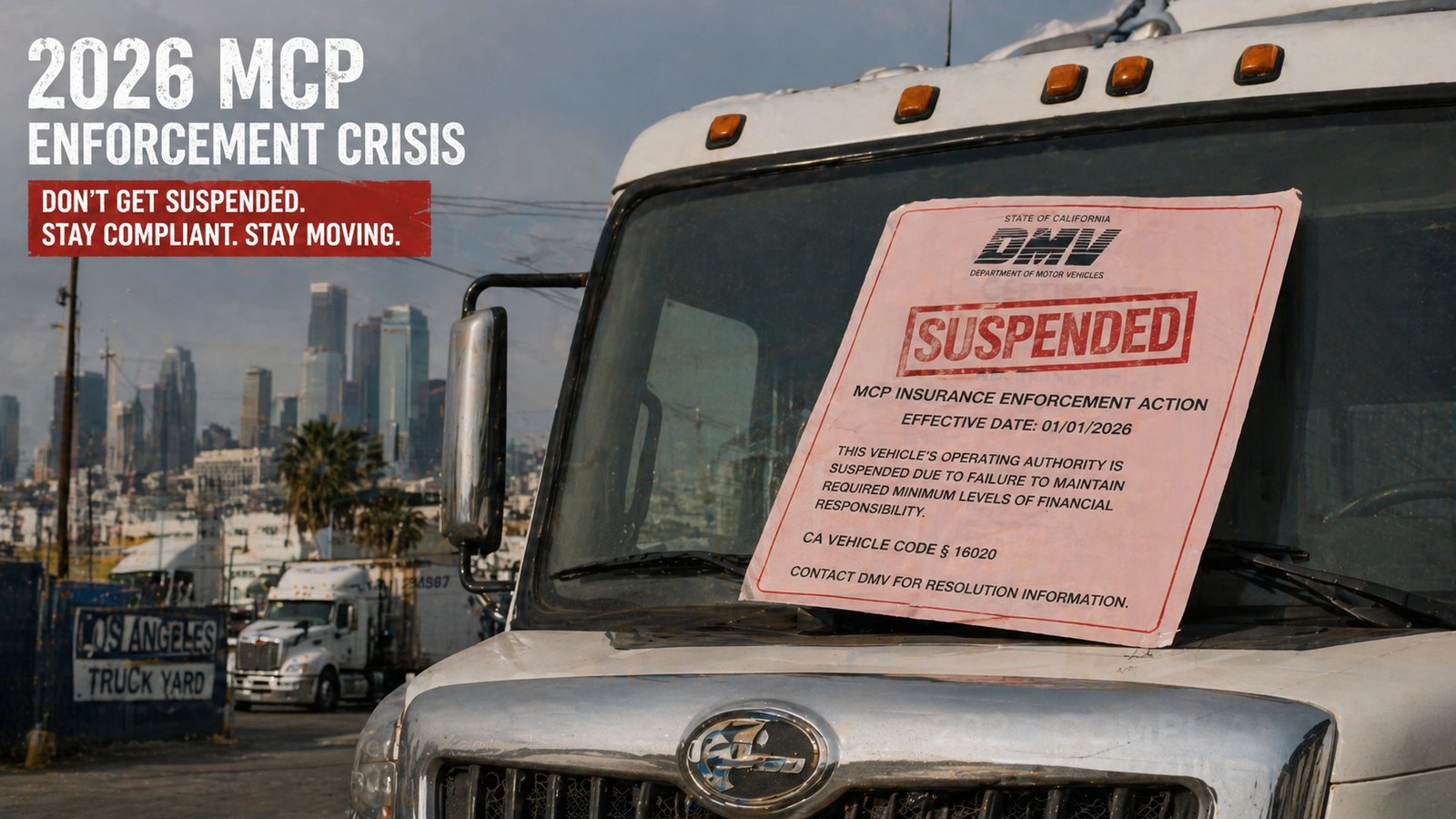
🚨 ATTENTION CALIFORNIA HAULERS: Is your Motor Carrier Permit (MCP) a ticking time bomb? In April 2026, the DMV has automated insurance cancellations, meaning one tiny "Name Mismatch" triggers an immediate impoundment. Learn the AB5-Proof insurance secrets, mastering the CA DMV Form MC 65 M, and how to dodge the $16,000 premium spikes in Los Angeles and the Central Valley!
Advertisement
California 2026: The MCP Insurance Death Trap and the AB5 Hangover
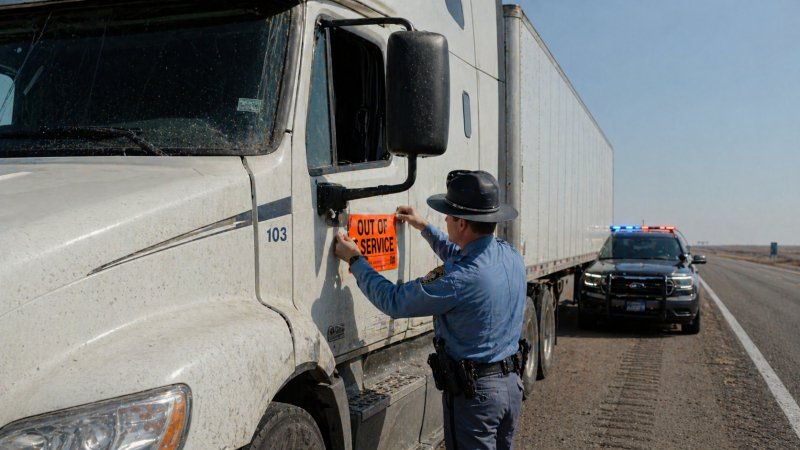
If you are operating in California on this Tuesday, April 28, 2026, you are driving through the most regulated trucking environment in human history. The "Golden State" has officially become the "Impound State" for carriers who fail to respect the Motor Carrier Permit (MCP) system. In April 2026, the California DMV has successfully integrated its new automated enforcement AI, which cross-references your insurance filings with your VINs every 12 hours. One mismatch, and your MCP is dead.
Advertisement
Advertisement
Advertisement
Advertisement
For the independent owner-operator, the stakes have never been higher. Between the ongoing fallout of AB5 misclassification laws and the skyrocketing cost of Form MC 65 M filings, California is a market where only the most technically proficient survive. At TheVoxDaily, we have the first-hand breakdown of how to keep your plates legal and your trucks out of the impound lot.
1. The MC 65 M Nightmare: Why Your COI is Worthless in California
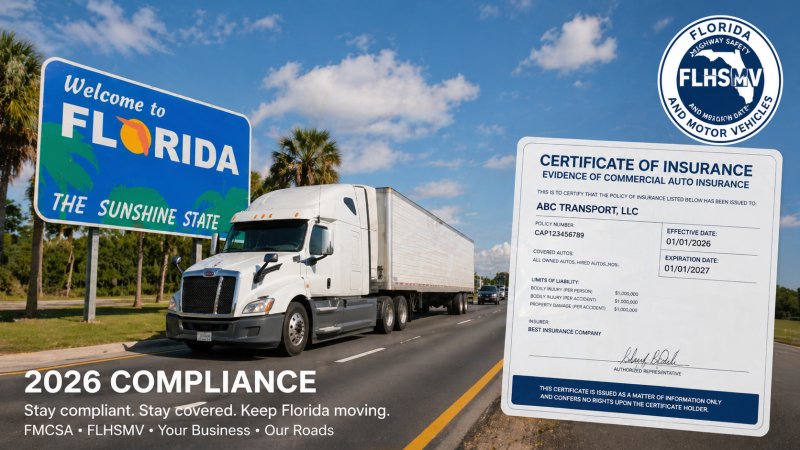
Most new carriers make the fatal mistake of thinking their Accord Certificate of Insurance (COI) is enough to satisfy the DMV. In 2026, California is a "Filing State." If your insurance carrier does not electronically transmit Form MC 65 M (for Liability) and Form MC 68 M (for Cargo) directly to the Sacramento DMV headquarters, your MCP will be suspended within 15 days of your policy start date.
The "Exact Name" Glitch of April 2026
The DMV’s new automation system does not recognize "close enough." If your insurance policy says "Lozano & Sons Trucking LLC" but your California DMV registration was filed as "Lozano and Sons Trucking, LLC" (using 'and' instead of '&'), the system will reject the electronic filing. Because it’s automated, you won’t get a human phone call; you’ll simply receive a Notice of Intent to Suspend in the mail, often arriving after the suspension has already started.
2. The AB5 Insurance Paradox: 2026 Update
AB5 has fundamentally changed who pays for insurance in California. As of April 2026, if you are an owner-operator leased to a larger carrier, "Non-Trucking Liability" (Bobtail) is no longer enough to protect the master carrier from misclassification lawsuits. California courts are now looking at whether the owner-operator carries their own Occupational Accident Insurance and Workers' Comp as proof of independence.
If you are an independent carrier hiring 1099 drivers in California this month, your insurance carrier is likely demanding a Ghost Policy for Workers' Comp just to issue your liability coverage. This "tax" on independent contractors is adding an average of $2,500 per year to the cost of doing business in the Central Valley and Inland Empire.
3. California Premium Reality: The Cost of Doing Business
Data from the first three weeks of April 2026 shows that California premiums have decoupled from the national average. While a driver in Mississippi might pay $4,000, a Los Angeles driver is facing "Nuclear Verdict" surcharges.
| California Region | Avg. Annual Premium (2026) | MCP Status Risk |
|---|---|---|
| Los Angeles / Long Beach (Port) | $16,500 - $28,000 | Critical (High Audit Rate) |
| Central Valley (Ag Hauling) | $11,000 - $18,000 | Moderate |
| Northern CA / Bay Area | $14,000 - $22,000 | High (Traffic Density) |
4. The "Pure Comparative Negligence" Trap
California operates under a Pure Comparative Negligence system. This means that even if a passenger car is 99% at fault for hitting your truck, you (and your insurance) can still be held liable for 1% of the damages. In a $10 million injury case, that 1% is $100,000—more than many small carriers have in liquid cash. This is why 2026 insurance underwriters are forcing California trucks into "Surplus Lines" (non-standard) markets, where premiums are 30% higher but the legal defense is more aggressive.
5. The 2026 California Cargo Mandate (Form MC 68 M)
While the federal government is loose on cargo, the California DMV requires Form MC 68 M for all "For-Hire" carriers. The minimum is $10,000 for one vehicle and $25,000 for multiple. However, first-hand reports from the Port of Long Beach indicate that terminal operators are now requiring $250,000 in Cargo and $1,000,000 in General Liability before a truck can even enter the gates. If you are filing state-minimums, you are effectively locking yourself out of 80% of California's freight volume.
6. April 2026 Survival Checklist for CA Haulers
- Match Your MCP to Your Policy: Check every comma and period. If they don't match, your automated suspension is already in the queue.
- Telematics Discount: In 2026, California carriers like Progressive and Nationwide are offering up to 25% off if you share your ELD/Camera data. In a state this expensive, you can't afford to say no to "Big Brother."
- Check Your MCS-150: The DMV AI pulls from the FMCSA SAFER system. If your MCS-150 hasn't been updated since 2024, your "Fleet Size" mismatch will trigger an audit of your MCP insurance limits.
7. Summary: Don't Let the DMV Win
California trucking is a game of technicalities. The drivers making $300k a year aren't just better drivers; they are better at managing their digital compliance profile. By mastering the MC 65 M filing and staying ahead of the AB5 litigation curve, you keep your trucks on the 5 and your revenue in the black. For the latest West Coast intelligence, keep your browser locked to TheVoxDaily.
Advertisement