The Georgia 'Nuclear' Fallout 2026: New Direct Action Laws and the $25 Million Verdict Threat
☢️ IS YOUR GEORGIA AUTHORITY PROTECTED FROM A 'NUCLEAR' VERDICT? As of April 2026, Georgia’s legal landscape has shifted! Discover how the new SB 426 changes your liability, why the "Direct Action" statute is a trap for small fleets, and the first-hand technical secrets to mastering Georgia Form E & H filings to avoid the $500-a-day non-compliance fines!
Advertisement
Georgia 2026: Surviving the Nuclear Verdict Era and SB 426
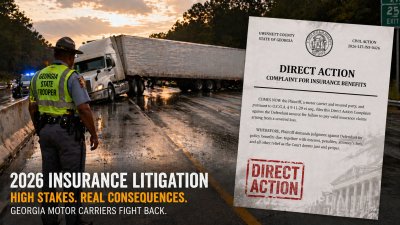
If you are pulling a reefer through Atlanta or hauling logs in South Georgia on this Tuesday, April 28, 2026, you are operating in what insurance underwriters call a "Thermonuclear Zone." For years, Georgia has been labeled a judicial hellhole due to its Direct Action Statute, which allowed trial lawyers to sue insurance companies directly alongside the trucking company. However, as of late 2024 and moving into the 2026 peak season, the rules of engagement have changed with the implementation of Senate Bill 426.
Advertisement
Advertisement
Advertisement
Advertisement
At TheVoxDaily, we are tracking the first-hand impact of these legal shifts. While SB 426 was designed to protect small carriers, the "Direct Action" trap hasn't disappeared—it has simply evolved. If your Georgia insurance filings aren't 100% accurate, you are leaving your business exposed to the kind of "Nuclear Verdicts" that have exceeded $25 million in recent Peach State trials.
1. The SB 426 Reality Check: Is the Bullseye Off Your Back?
Prior to the 2026 enforcement cycle, Georgia was one of the few states where a jury would see an insurance company's name (like Progressive or Berkshire Hathaway) right on the verdict form. This often led to "deep pocket" syndrome, where juries awarded massive sums simply because they knew a billion-dollar insurer was paying the bill.
The April 2026 Rule: Under SB 426, plaintiffs can now only sue your insurer directly if you are bankrupt or if you cannot be served. While this sounds like a win, it has created a new technical danger. Trial lawyers are now using "Diligence Audits" to prove they couldn't find you, just so they can pull your insurance company back into the case. If your MCS-150 address doesn't match your physical yard, you are giving them the evidence they need to bypass the law and go for the "Nuclear" payout.
2. Georgia Form E and Form H: The Digital Red Tape
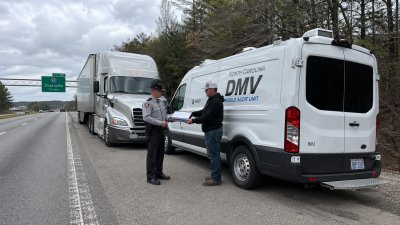
To operate legally in Georgia, you must be registered as a GIMC (Georgia Intrastate Motor Carrier). This registration is tied directly to your insurance filings. In 2026, the Georgia Department of Public Safety (DPS) has moved to a "Zero Tolerance" electronic verification system.
Form E: The Liability Wall
Your insurance company must file Form E through the Tyler Insurance Filings portal. In Georgia, the name on your Form E must match your GA State ID Number exactly. We are seeing a 15% rejection rate in April 2026 because carriers are using their USDOT number for filings that require the specific GIMC ID. If your status isn't "Active" in the Georgia MCCS system, your truck is subject to a $500 fine at the first weigh station you hit.
Form H: The Cargo Mandate
While the federal government is lax on cargo, Georgia requires Form H for all Household Goods (HHG) movers. If you are moving furniture within the state, you must show $5,000 per vehicle in cargo liability. Failing to have an active Form H on file in 2026 will lead to an immediate "Stop Movement" order from the DPS.
3. Georgia Insurance Costs: The "Atlanta Surcharge"
Our April 28, 2026, data shows that premiums in Georgia are split by the "285 Perimeter." If your truck is garaged inside the Atlanta metro area, you are paying a "litigation premium" that doesn't exist in rural counties.
| Georgia Zone | Avg. Annual Premium (2026) | Filing Requirement |
|---|---|---|
| Metro Atlanta (Inside 285) | $15,500 - $24,000 | Form E (Electronic Only) |
| Savannah (Port Operations) | $13,000 - $19,000 | Form E + Port Endorsement |
| Rural North/South Georgia | $8,000 - $12,000 | Standard Form E |
4. The "Direct Action" Residual Risk
Even with SB 426, your insurance carrier is looking at your Safety Measurement System (SMS) scores more than ever. In 2026, a single "Unsafe Driving" violation in Georgia is viewed as a $1,000,000 liability risk because it allows a plaintiff's attorney to argue "negligent entrustment." Insurance companies in Georgia are now canceling carriers mid-term if their BASIC scores cross the 65% threshold in any category. You must audit your CSA portal weekly to stay insurable in this state.
5. The New York Parallel: Automated Audits
While we focus on the South, the Northeast is becoming just as dangerous. New York has implemented the NYSDOT Insurance Bridge in 2026. This system cross-references your insurance lapse dates with the E-ZPass system. If you drive over the George Washington Bridge with a lapsed Form E, the toll camera automatically flags your registration for suspension. Between New York's "Scaffold Law" and Georgia's "Nuclear Verdicts," the 2026 carrier must be a digital compliance expert to survive.
6. Summary: Your Georgia Defense Plan
- Update Your MCS-150: Do it today. An outdated address is the easiest way for a lawyer to bypass SB 426 and sue your insurance company directly.
- Confirm Tyler Filings: Ask your agent for the "Tyler Confirmation Number" for your Georgia Form E. A paper certificate is not proof of filing in Georgia.
- Monitor Your "Tillery" Compliance: Named after the bill's sponsor, Senator Blake Tillery, stay aware of the "compromise" rules that allow insurers to be added to lawsuits if your business structure is deemed "insolvent."
Georgia is the heart of Southern freight, but it is a state that demands perfection. By mastering the GIMC requirements and the nuances of SB 426, you protect your fleet from the "Nuclear" fallout of 2026. For the best first-hand trucking intelligence, keep it locked to TheVoxDaily.
Advertisement