Washington WUTC and Oregon Weight-Mile Audits 2026: The New Pacific Northwest Insurance Pincer
April 2026 Pacific Northwest Compliance Update: Learn why the Washington WUTC is issuing immediate 'Cease and Desist' orders for insurance mismatches and how Oregon’s Weight-Mile Tax portal now triggers automatic ODOT insurance audits. Essential first-hand technical guide for mastering Form E filings in WA and OR to avoid 2026 roadside impoundments.
Advertisement
The PNW Compliance Grid 2026: Navigating WUTC and Oregon’s Weight-Mile Pincer
If you are hauling timber in the Cascades or navigating the I-5 corridor through Seattle and Portland on this Tuesday, April 28, 2026, you are operating in the most digitally integrated freight market in the country. The Pacific Northwest has moved beyond simple weigh station checks. Today, the Washington Utilities and Transportation Commission (WUTC) and the Oregon Department of Transportation (ODOT) use a shared "Data-Vault" to monitor carrier insurance in real-time.
Advertisement
Advertisement
Advertisement
Advertisement
For the owner-operator, the 2026 reality is that a discrepancy in your Oregon mileage report can now trigger an automatic audit of your Washington insurance filings. At TheVoxDaily, we have the technical breakdown of the "State Handshakes" required to keep your authority active in the Pacific Northwest.
1. Washington WUTC: The 'Oversight' Authority
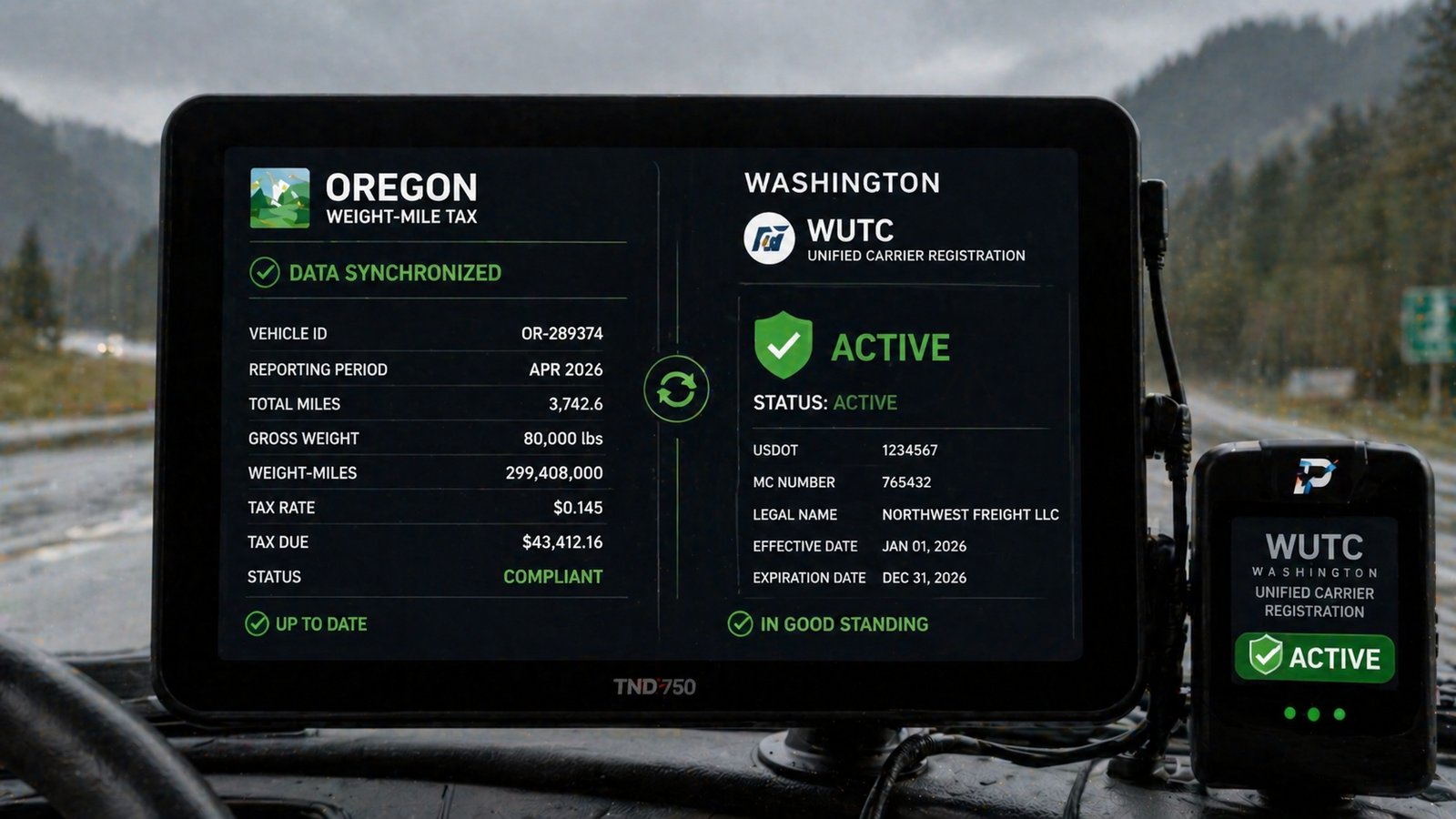
In Washington, if you are an Intrastate carrier or an Interstate carrier with a Washington base, you are governed by the WUTC. Unlike other states where the DMV handles insurance, the WUTC operates as a regulatory "Judge." As of April 2026, the WUTC has launched its "Safe-Flow" initiative, which requires a specific electronic Form E filing that many national agents fail to complete correctly.
The 'Carrier Classification' Trap
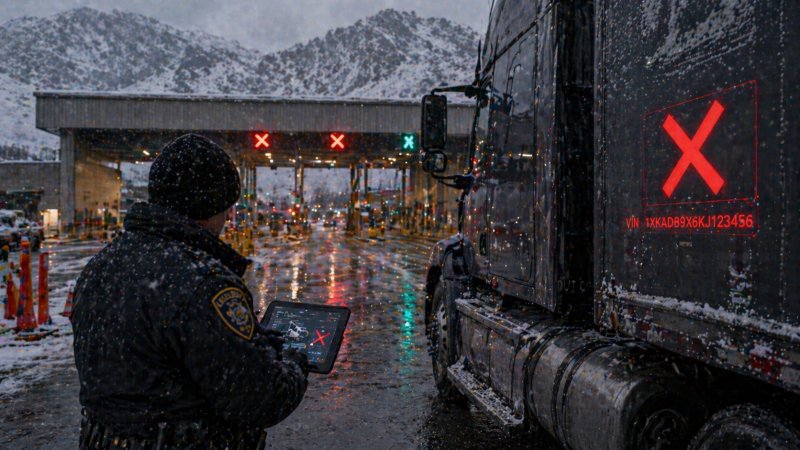
The WUTC categorizes carriers into "Common," "Contract," and "Private." In 2026, if your insurance policy is rated for "Contract" hauling but your WUTC permit is for "Common" carriage, the system triggers a Notice of Non-Compliance. If this isn't resolved within 10 days, the WUTC issues a 'Cease and Desist' order that is visible to every Washington State Patrol officer via their in-car LPR systems.
2. Oregon’s Weight-Mile Tax: The New Insurance Audit Tool
Oregon is unique because it does not participate in the International Fuel Tax Agreement (IFTA) for weight-distance; instead, it uses the Weight-Mile Tax. In April 2026, the ODOT Commerce and Compliance Division (CCD) has integrated the weight-mile reporting portal with the insurance verification system.
The April 2026 Reality: When you file your monthly or quarterly weight-mile report, the system performs a "Deep Sync" with your Form E and Form H filings. If your reported mileage indicates you are operating more vehicles than are listed on your insurance schedule, the ODOT portal will block your tax filing and place your Oregon Weight-Mile Receipt in "Suspended" status. Without an active receipt, you are subject to immediate impoundment at the Wyeth or Woodburn scales.
3. PNW Insurance Costs: The 2026 Regional Matrix
Based on first-hand data from the last 14 days, premiums in the PNW are influenced by "Terrain Risk" and "Urban Density" surcharges.
| Region | Avg. Annual Premium (2026) | Audit Frequency |
|---|---|---|
| Seattle/Tacoma (I-5 Corridor) | $15,000 - $22,500 | High (Real-time LPR) |
| Portland Metro (ODOT Hub) | $13,500 - $19,000 | Extreme (Tax-Linked) |
| Eastern WA/OR (Ag & Timber) | $9,000 - $13,500 | Moderate |
4. The 'Oregon-Only' Bond Requirement
One detail often missed in 2026 is the Oregon Highway Use Bond. If you are a new carrier or have a history of late weight-mile payments, ODOT will require a bond (usually $2,000 - $5,000) before issuing your permit. In April 2026, insurance companies are increasingly bundling these bonds with primary liability policies. If your agent hasn't mentioned the "Oregon Bond Rider," you may find your weight-mile account locked despite having millions in liability coverage.
5. April 28, 2026, PNW Compliance Checklist
- Verify WUTC Status: Access the Washington WUTC Transportation portal. Ensure your 'Insurance Status' is 'Active' and that your 'Carrier Type' matches your actual operation.
- Audit Your Weight-Mile Schedule: Compare your ODOT 'Registered Vehicle' list with your insurance policy's 'Scheduled Autos.' Any discrepancy will trigger a 2026 automated audit.
- The 'Form E' Handshake: Confirm that your agent has filed Form E with BOTH the WUTC (for Washington) and ODOT (for Oregon). They are separate agencies with separate digital portals.
6. Summary: Securing Your PNW Authority
The Pacific Northwest offers high-value freight, but it demands a high level of digital precision. In 2026, the carriers who thrive are those who understand that Weight-Mile Taxes and WUTC Oversight are two sides of the same insurance coin. By mastering these technical requirements, you ensure your business remains "Active" while others are sidelined by the PNW compliance pincer. For the ultimate first-hand trucking intelligence, stay locked to TheVoxDaily.
Advertisement