Democrats Accuse Trump Administration of Weakening Anti-Trafficking Efforts Through Immigration Enforcement Shift
Democratic lawmakers warn immigration crackdowns are diverting federal resources from anti-trafficking efforts, intensifying a major policy and oversight conflict.
 Ronald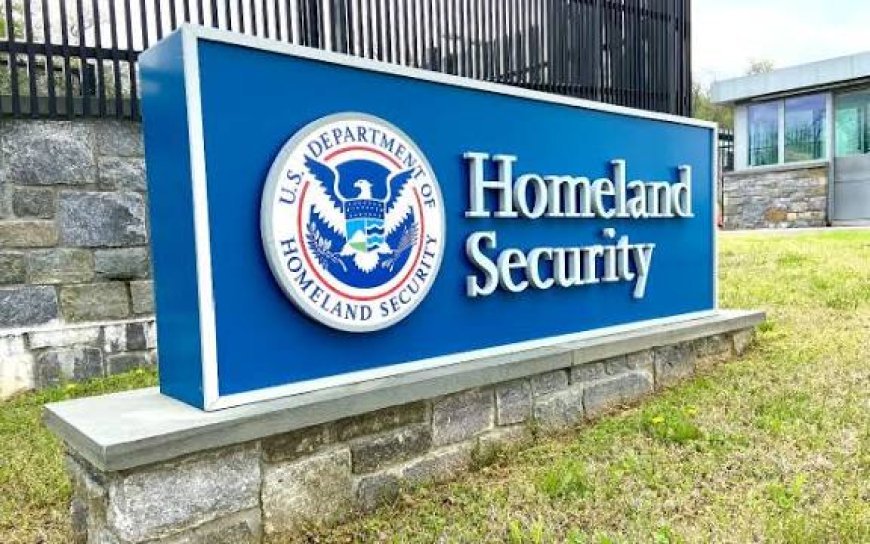
Advertisement
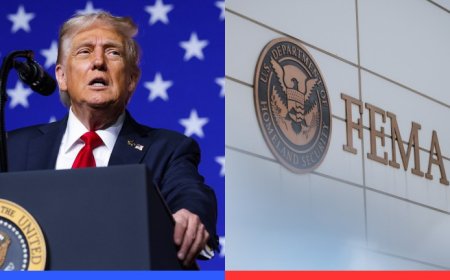
A growing dispute over federal enforcement priorities has emerged in Washington as Democratic lawmakers contend that the Trump administration’s expansive immigration crackdown has diverted critical resources away from efforts to combat human trafficking and child exploitation. The conflict, articulated in a formal letter from nearly two dozen House Democrats to senior federal officials, reflects a broader struggle over how the United States allocates law enforcement capacity in an era of intensified domestic security policy and heightened political polarization surrounding immigration.
Advertisement
Advertisement
Advertisement
Advertisement
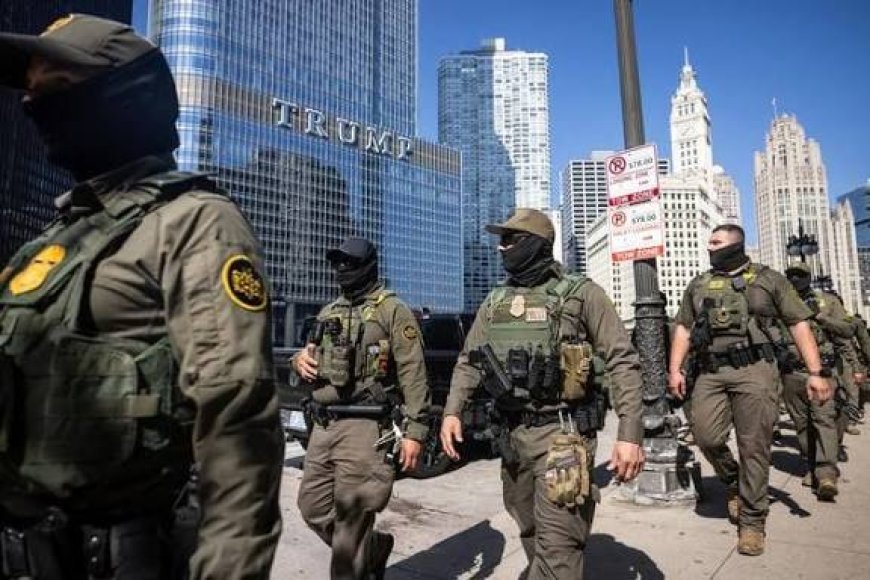
The lawmakers’ intervention centers on the assertion that personnel and funding originally designated for anti-trafficking operations have been reassigned to support large-scale immigration enforcement initiatives. Their demand that the Departments of Homeland Security and Justice restore full staffing to specialized investigative units underscores concerns that institutional priorities have shifted in ways that risk undermining long-established federal commitments to combating exploitation. By framing the issue as both a policy failure and a moral lapse, the letter situates enforcement choices within a broader debate about the responsibilities of the federal government toward vulnerable populations.
The dispute is rooted in structural changes to the mission and operational posture of federal agencies. Early executive actions reoriented the Department of Homeland Security’s focus toward immigration enforcement as a central organizing principle of domestic security policy. Such a redefinition of institutional purpose carries consequences that extend beyond administrative adjustments, reshaping how federal agencies deploy personnel, allocate investigative capacity, and define strategic objectives. In this context, the reassignment of agents from specialized units to immigration operations represents not merely a bureaucratic shift but a transformation in the hierarchy of national security priorities.
Evidence cited by lawmakers and policy analysts suggests that the scale of these reassignments has been substantial. Internal documentation referenced in public reporting indicates that tens of thousands of officers across multiple agencies were redirected to support immigration enforcement operations. The implications of such reallocations are particularly acute for investigative domains that rely on sustained, resource-intensive work, including efforts to dismantle trafficking networks and prosecute exploitation crimes. Unlike episodic enforcement actions, these investigations often require long-term coordination across jurisdictions and institutions, making them especially sensitive to disruptions in staffing and funding.

The administration has rejected claims that enforcement priorities have compromised public safety, arguing that immigration control and anti-trafficking efforts are interconnected components of national security. Officials maintain that strengthened border enforcement reduces opportunities for trafficking networks to operate, framing immigration policy as a preventive mechanism within a broader security architecture. This interpretation reflects a conceptual approach in which migration control is treated as a foundational element of domestic protection, rather than a policy domain distinct from other law enforcement objectives.
Democratic lawmakers, however, contend that such framing obscures the operational realities faced by investigators and prosecutors. By requesting detailed accounting of personnel reassignments and affected investigations, they seek to establish whether policy decisions have produced measurable gaps in enforcement capacity. Their emphasis on transparency reflects a wider concern that institutional credibility depends on demonstrable alignment between stated priorities and operational outcomes. References within the letter to unresolved or undisclosed investigative materials in high-profile cases further underscore anxieties about public trust in federal accountability mechanisms.

The dispute also highlights the political geography of enforcement policy. Lawmakers representing districts with documented trafficking activity have reported strain among local law enforcement agencies, advocacy organizations, and social service providers that rely on federal partnerships. These localized impacts illustrate how national policy shifts reverberate through community-level enforcement ecosystems, altering the capacity of institutions that operate at the intersection of criminal justice and social welfare. The resulting tension between federal strategy and local experience exemplifies the challenges of coordinating complex policy objectives across multiple levels of governance.
Institutionally, the debate reflects a deeper contest over the meaning of security within contemporary American governance. The Department of Homeland Security, established in the aftermath of the September 11 attacks, was originally designed to address external threats and systemic vulnerabilities. The reorientation of its mission toward immigration enforcement represents a significant reinterpretation of that mandate, with implications for how resources are distributed across competing policy domains. Whether such a shift enhances or diminishes overall security raaaa a matter of contested interpretation.
The political implications of this conflict are substantial. Immigration enforcement has become a defining feature of national political identity, shaping electoral narratives and policy debates alike. When resource allocation decisions are perceived as privileging one domain of enforcement over another, they become focal points for broader ideological disputes about governance, responsibility, and the role of the state. The resulting controversy illustrates how administrative decisions can acquire symbolic significance far beyond their technical dimensions.
Beyond immediate policy disagreements, the dispute raises enduring questions about the balance between deterrence-oriented enforcement and protective social policy. Efforts to combat trafficking require sustained investment in investigative infrastructure, victim support mechanisms, and interagency coordination. When these systems are perceived as weakened, the legitimacy of broader enforcement strategies may be called into question, particularly among constituencies that view protection of vulnerable populations as a core governmental obligation.
The administration’s insistence that its policies have enhanced national safety reflects a competing narrative that prioritizes border control as a primary defense against criminal networks. This narrative situates immigration enforcement within a framework of preventative security, suggesting that robust control mechanisms reduce the conditions under which exploitation can occur. The tension between these interpretations reveals the extent to which contemporary policy debates are shaped not only by empirical claims but by divergent conceptualizations of risk and responsibility.

As congressional oversight intensifies and public debate continues, the controversy over resource allocation within federal law enforcement agencies underscores the complex trade-offs inherent in national security governance. Decisions about where to deploy personnel and funding are not merely administrative calculations; they are expressions of political judgment about which threats demand priority and which forms of protection define the responsibilities of the state.
In this context, the dispute between Democratic lawmakers and the Trump administration represents more than a disagreement over policy implementation. It reflects a broader contest over the direction of federal enforcement strategy and the values that underpin it. The outcome of that contest will shape not only the future of immigration policy but also the institutional architecture through which the United States confronts exploitation, vulnerability, and the evolving definition of public safety in the twenty-first century
Advertisement