Meghan Markle And Doria Ragland Under Scrutiny As Transparency Questions Resurface
Meghan Markle’s close bond with her mother Doria Ragland faces renewed scrutiny as questions around transparency, sealed records, media narratives, and public perception continue to fuel debate
 Ronald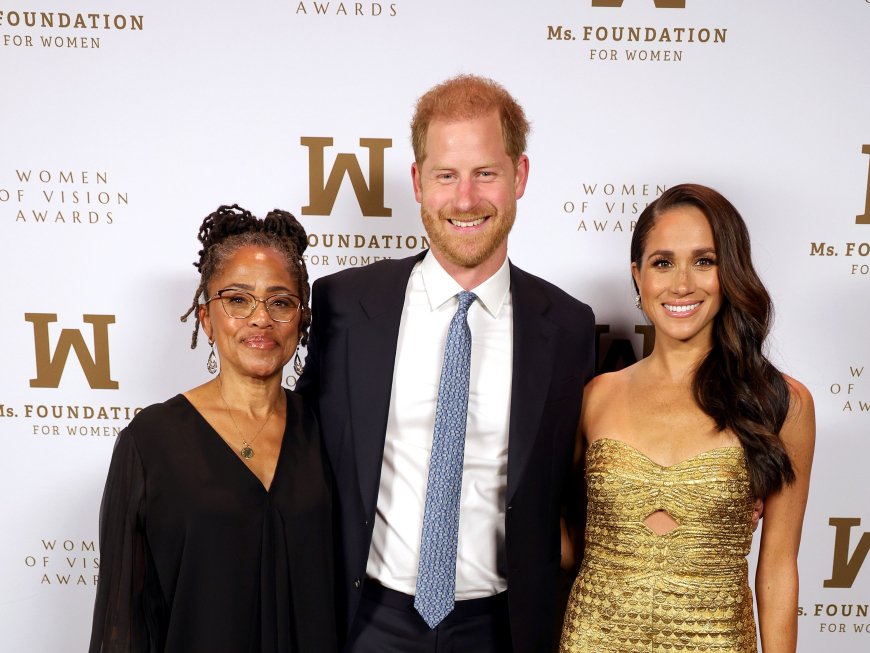
Advertisement
The relationship between Meghan Markle and her mother, Doria Ragland, has evolved into far more than a familiar celebrity family story, instead becoming a focal point for broader debates about transparency, perception, media power, and the uneasy line between privacy and accountability in the modern public sphere, particularly when personal narratives intersect with global fame and royal association.
Advertisement
Advertisement
Advertisement
Advertisement
While Meghan has consistently framed her mother as a steady presence and moral anchor in her life, the public conversation surrounding Doria has grown increasingly layered and contested, shaped not only by affection and loyalty but by unanswered questions, sealed legal records, and the absence of clarity that often invites speculation rather than resolution.
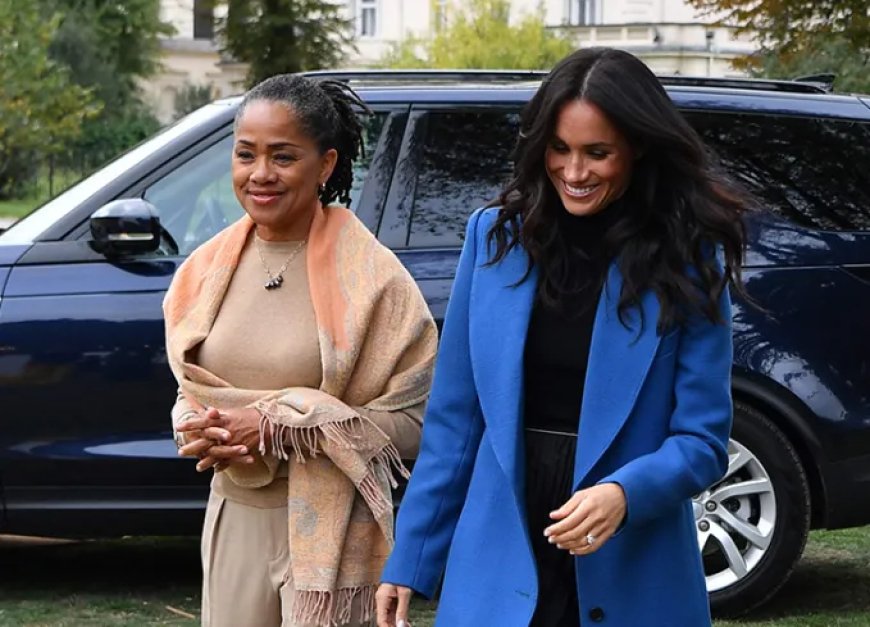
Central to this scrutiny is the recurring issue of transparency, especially in relation to legal matters involving both women, where the sealing of certain court documents, a lawful but controversial practice, has triggered criticism and suspicion among observers who view such actions as an effort to manage narratives rather than simply protect privacy, regardless of the actual intent behind those decisions.
In the world of public perception, secrecy, even when legally justified, rarely reads as neutral, instead fostering an environment where doubt thrives, trust erodes, and every unanswered question becomes fertile ground for conjecture, making it increasingly difficult for the public to distinguish between legitimate privacy boundaries and deliberate information control.
Compounding this atmosphere is the persistent circulation of unverified claims about Doria Ragland’s past, largely propagated through online forums and social media ecosystems that thrive on outrage rather than evidence, with allegations ranging from financial misconduct to imprisonment, claims that remain unsupported by credible documentation yet continue to linger due to the absence of definitive public clarification.
While such allegations must be approached with caution and skepticism, their endurance highlights a fundamental reality of the digital age, where repetition often substitutes for proof, and where silence, whether strategic or incidental, can allow misinformation to harden into perceived truth in the public imagination.
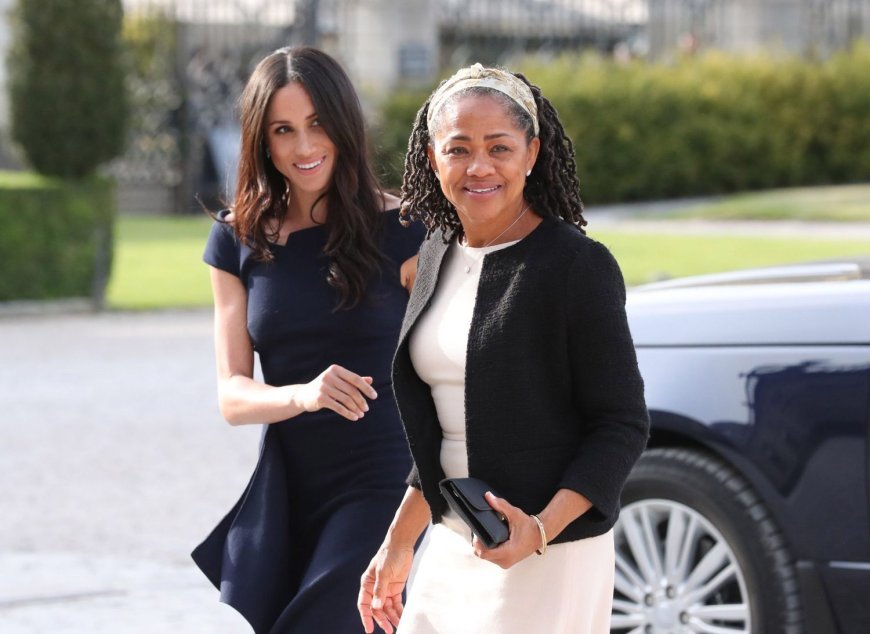
Meghan’s vocal and unwavering defense of her mother has only intensified this debate, interpreted by supporters as an admirable demonstration of familial loyalty in the face of racially charged attacks and media hostility, while critics frame it as a calculated effort to reinforce a carefully curated public image that leaves little room for nuance or accountability.
The tension becomes particularly visible when contrasted with Meghan’s fraught relationship with her father, Thomas Markle, whom she has publicly described as estranged yet occasionally referenced in the context of reconciliation, a juxtaposition that has fueled claims of inconsistency and selective forgiveness within her approach to family relationships.
To some observers, the stark difference in how Meghan defends her mother while distancing herself from her father suggests an uneven application of standards, raising questions about whether loyalty, narrative alignment, or public optics play a determining role in how familial bonds are maintained or severed under the glare of global attention.
This perceived imbalance feeds into broader critiques of Meghan’s public persona, often described as meticulously managed and strategically presented, where personal history is selectively revealed while less flattering elements are either minimized or shielded, a dynamic that inevitably extends to how her relationship with Doria is framed and understood.
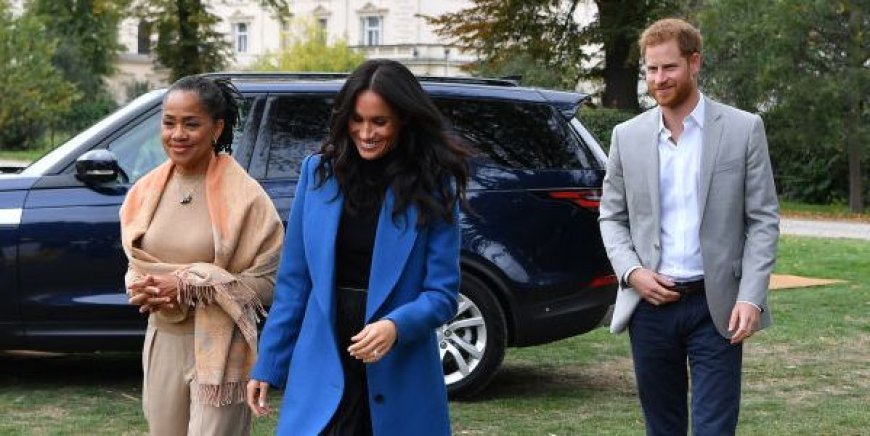
In this context, the mother-daughter bond becomes not just a private relationship but a symbolic one, reflecting larger conversations about race, class, credibility, and the ways in which women, particularly women of color, are scrutinized and judged within predominantly white media structures, an argument frequently raised by Meghan’s defenders and dismissed by her critics as deflection.
What remains undeniable is the sheer intensity of the scrutiny itself, which underscores how difficult it has become for public figures to maintain clear boundaries between private life and public accountability, especially when every silence is interrogated and every statement dissected for subtext and motive.
The absence of a definitive, unified narrative surrounding Meghan and Doria’s past allows multiple interpretations to coexist, leaving the public to assemble fragmented information into conclusions that often reveal more about societal anxieties and media consumption habits than about the individuals at the center of the story.
Ultimately, the relationship between Meghan Markle and Doria Ragland exists at the intersection of personal loyalty and public perception, shaped as much by genuine affection as by the relentless machinery of modern media, where truth competes with speculation and image management becomes both a shield and a liability.
As scrutiny continues and narratives evolve, the fundamental questions surrounding transparency, authenticity, and the ethics of narrative control are unlikely to fade, ensuring that the conversation around Meghan and Doria remains less about definitive answers and more about the uneasy tension between privacy, power, and perception in an age where nothing ever truly disappears.
Advertisement