Trump Considers New Military Strike on Iran as Nuclear Talks Stall
U.S.–Iran tensions intensify as stalled nuclear discussions and military positioning raise the risk of direct confrontation in the Middle East.
 Ronald
Advertisement
The prospect of renewed U.S. military action against Iran has re-emerged as nuclear negotiations between Washington and Tehran show little sign of progress, highlighting a deepening strategic impasse that blends diplomacy, coercion and military preparedness. President Donald Trump’s consideration of potential strikes underscores how rapidly the policy framework surrounding Iran has shifted from conditional engagement toward calibrated confrontation.
Advertisement
Advertisement
Advertisement
Advertisement
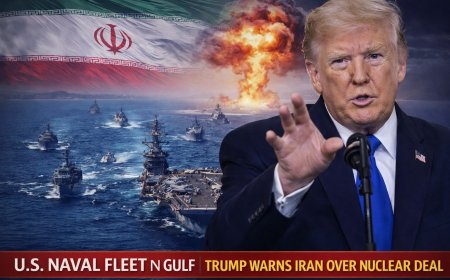
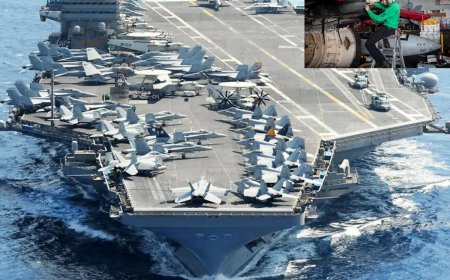
The current moment reflects a broader pattern in U.S.–Iran relations in which negotiation efforts frequently unfold alongside visible demonstrations of force. The positioning of a U.S. carrier strike group within operational reach of Iran signals that military options remain an active component of Washington’s strategic toolkit. This dual-track approach, combining diplomatic overtures with enhanced military posture, reflects a long-standing doctrine that leverage in negotiation is strengthened through credible deterrent capability.
The diplomatic deadlock centers on competing definitions of acceptable limits on Iran’s strategic capabilities. Washington’s demands extend beyond restrictions on uranium enrichment to include constraints on ballistic missile development and regional proxy activity. Tehran has resisted expanding negotiations beyond its nuclear program, framing additional requirements as infringements on national sovereignty and defensive autonomy. This divergence has created a structural barrier to meaningful progress, leaving both sides entrenched in incompatible negotiating positions.
Iran’s continued efforts to rebuild and fortify elements of its nuclear infrastructure further complicate the strategic environment. Efforts to deepen and harden facilities introduce technical uncertainties regarding both capability and vulnerability, reinforcing the perception within U.S. policy circles that delay may narrow future options. At the same time, Iran’s limitation of international inspection access has intensified concerns about transparency and verification, central pillars of any sustainable nuclear agreement.
Military planning now unfolding in parallel with diplomatic stagnation reflects the logic of coercive diplomacy, in which the threat of force is intended to reshape an adversary’s cost-benefit calculation. Potential strike options reportedly encompass a range of targets associated with Iran’s security apparatus and nuclear program, indicating a strategy aimed at both deterrence and disruption. The expansion of U.S. defensive systems across the region, including missile defense deployments and joint air exercises, signals preparation not only for offensive action but for managing potential retaliation.
Regional dynamics amplify the significance of these developments. The Middle East’s interconnected security architecture means that any U.S.–Iran confrontation would reverberate across multiple alliances and conflict zones. Concerns among regional partners regarding missile threats and proxy networks shape Washington’s strategic posture, reinforcing a perception that containment of Iranian capabilities remains central to broader regional stability calculations.
Iranian leadership has responded to the prospect of military action with explicit warnings of immediate and forceful retaliation. Such messaging reflects both deterrent signaling and domestic political positioning, as Tehran seeks to project resilience while navigating internal pressures linked to economic strain and social unrest. The interplay between external pressure and internal legitimacy continues to influence Iran’s strategic behavior, complicating predictions about escalation thresholds.
Economic indicators offer an additional dimension to the unfolding crisis. Rising global oil prices in response to heightened tensions illustrate how geopolitical uncertainty in the Gulf region carries systemic implications for international energy markets. The sensitivity of supply chains to conflict risk reinforces the global stakes of what might otherwise appear as a bilateral confrontation.
The convergence of military positioning, diplomatic breakdown and economic volatility underscores a broader transformation in contemporary international security dynamics. Power projection increasingly operates as a continuous process rather than a discrete event, shaping negotiations before they occur and constraining options once they begin. In this environment, diplomacy and deterrence function not as alternatives but as interdependent instruments of statecraft.
As the United States and Iran navigate an increasingly narrow strategic corridor, the balance between signaling resolve and avoiding unintended escalation remains precarious. The trajectory of this confrontation will depend not only on immediate policy decisions but on the capacity of both actors to recalibrate objectives within a rapidly evolving regional and global context.
Advertisement