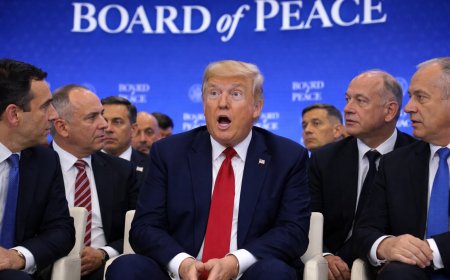
Trump Questions Gordie Howe Bridge Opening, Casting Uncertainty Over U.S.–Canada Infrastructure Pact
President Trump’s remarks challenging the Gordie Howe International Bridge have introduced uncertainty into a key U.S.–Canada infrastructure project nearing completion.
 Ronald
Advertisement
A major North American infrastructure project intended to deepen economic integration between the United States and Canada has entered a period of political uncertainty after President Donald Trump publicly questioned whether the Gordie Howe International Bridge should be allowed to open without renegotiated ownership terms. The remarks, delivered via social media as the project advances through final testing and commissioning, have transformed what was expected to be a routine operational milestone into a diplomatic flashpoint that touches on trade, sovereignty, and the evolving nature of cross-border economic power.
Advertisement
Advertisement
Advertisement
Advertisement
The bridge, which spans the Detroit River between Detroit, Michigan, and Windsor, Ontario, represents one of the most significant binational infrastructure investments in decades. Designed to expand commercial capacity across one of the busiest trade corridors in the world, the project is widely viewed by policymakers and industry leaders as essential to maintaining the competitiveness of North American supply chains. With major construction completed, engineers and regulatory authorities are now engaged in comprehensive system inspections intended to certify the bridge and its ports of entry for safe operation. This testing phase, typically procedural in nature, has instead become overshadowed by questions about the project’s political viability.
President Trump’s assertion that the United States receives insufficient benefit from the bridge has introduced a new dimension to bilateral relations with Canada. His suggestion that Washington should hold partial ownership of the asset reflects a broader pattern in his foreign policy posture, one that frames international agreements through a transactional lens focused on tangible returns. By challenging the existing financial structure of the project, Trump has signaled that cross-border infrastructure is not exempt from the renegotiation pressures that have characterized his approach to trade and alliance management more broadly.
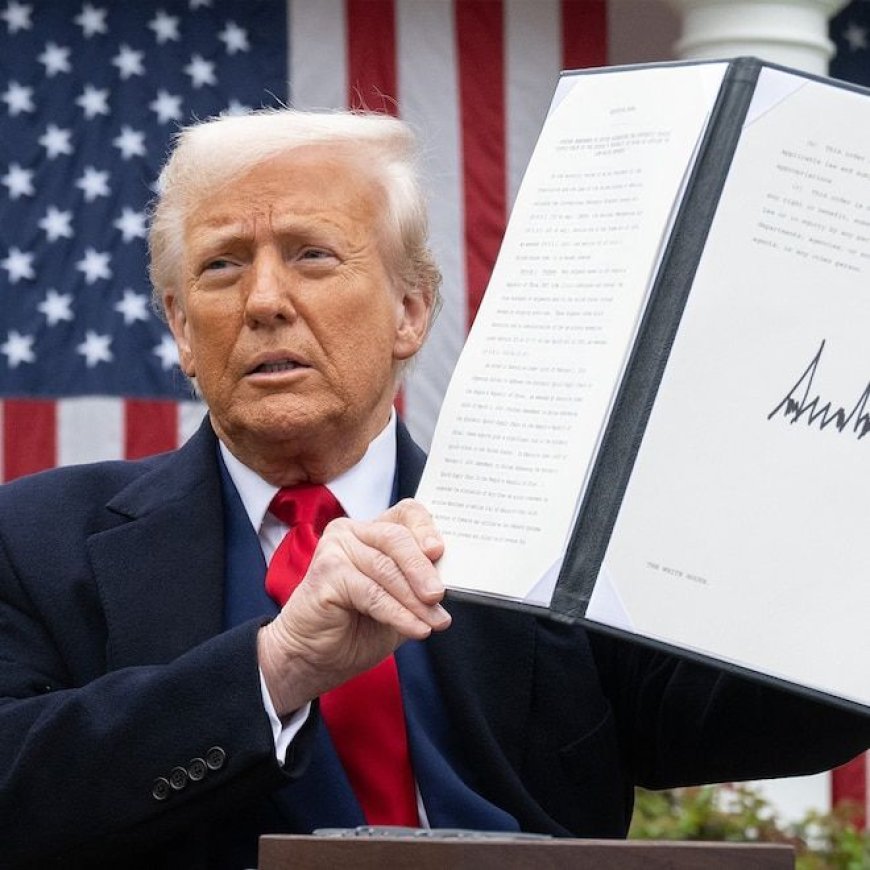
The financial architecture of the Gordie Howe International Bridge underscores why the issue carries symbolic as well as economic weight. Although the project is jointly owned by Michigan and Canada, the vast majority of its construction costs have been borne by the Canadian government, which expects to recover its investment through toll revenues once the crossing becomes operational. This arrangement was originally framed as a mutually beneficial compromise designed to expedite development of a critical trade link. Trump’s intervention reframes the structure as evidence of an imbalance in bilateral exchange, raising fundamental questions about how infrastructure partnerships are evaluated within an America First policy framework.
The strategic significance of the bridge extends beyond transportation efficiency. The Detroit–Windsor corridor handles a substantial portion of cross-border commerce between the two nations, particularly in the automotive sector, where supply chains depend on rapid, predictable transit across the border. Any uncertainty surrounding the bridge’s opening has immediate implications for manufacturers, logistics operators, and regional economies on both sides of the boundary. The project was conceived as a mechanism to reduce congestion, strengthen resilience in continental trade flows, and future-proof infrastructure against rising demand. Political disruption at this late stage introduces a level of unpredictability that markets and investors typically regard as destabilizing.
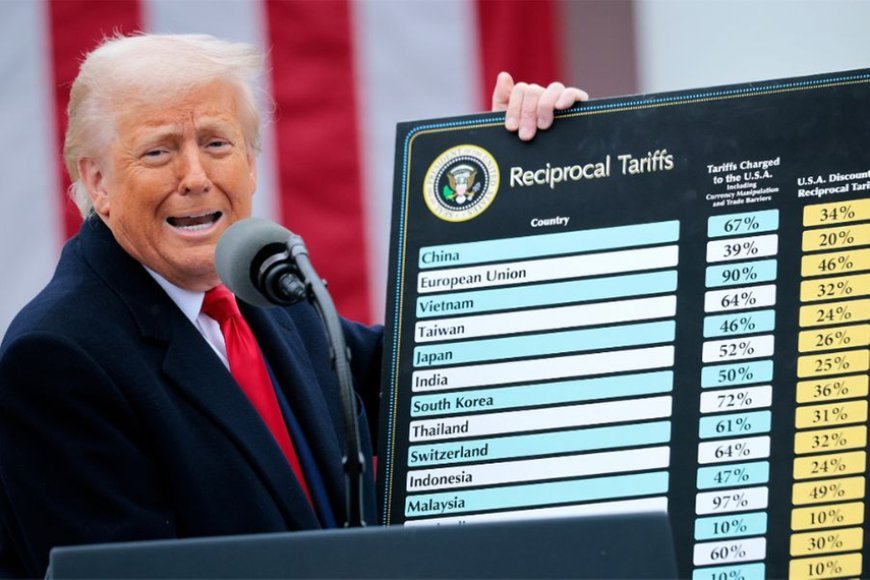
Trump’s comments also illuminate a deeper transformation in how infrastructure is understood within contemporary geopolitics. Bridges, ports, and transit corridors are no longer viewed solely as economic assets; they are increasingly interpreted as instruments of national leverage and symbols of strategic interdependence. By raising the possibility of withholding approval absent revised ownership terms, the administration has effectively reframed a transportation project as a bargaining chip within a broader negotiation over economic reciprocity. This shift reflects an emerging paradigm in which physical infrastructure becomes entwined with questions of sovereignty, influence, and strategic advantage.
The diplomatic implications for U.S.–Canada relations are particularly consequential. The two countries share one of the most integrated economic partnerships in the world, underpinned by decades of institutional cooperation and shared regulatory frameworks. Disputes over trade, energy, and industrial policy have periodically surfaced, yet they have historically been managed within stable diplomatic channels. Introducing uncertainty over a nearly completed joint infrastructure project risks injecting volatility into a relationship long characterized by predictability and mutual dependence.
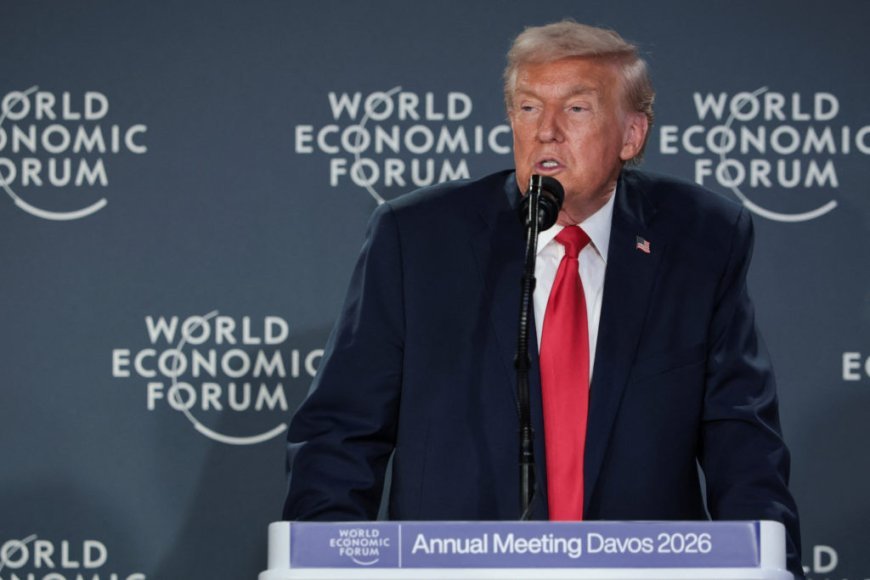
Canadian officials have not publicly responded in detail to the president’s remarks, a silence that reflects both diplomatic caution and the complexity of the situation. Ottawa’s substantial financial investment in the bridge positions it not merely as a stakeholder but as the primary underwriter of the project’s realization. The prospect of renegotiation at such an advanced stage raises questions about precedent and reliability in cross-border agreements, concerns that extend beyond this specific project to the broader framework of North American economic cooperation.
For the Trump administration, the controversy aligns with a consistent policy narrative emphasizing renegotiation of perceived imbalances in international arrangements. From defense burden-sharing within NATO to trade agreements across Asia and Europe, the administration has sought to recalibrate longstanding partnerships through direct pressure and demands for measurable returns. The Gordie Howe dispute suggests that this logic now encompasses infrastructure diplomacy, a domain traditionally insulated from overt geopolitical bargaining.
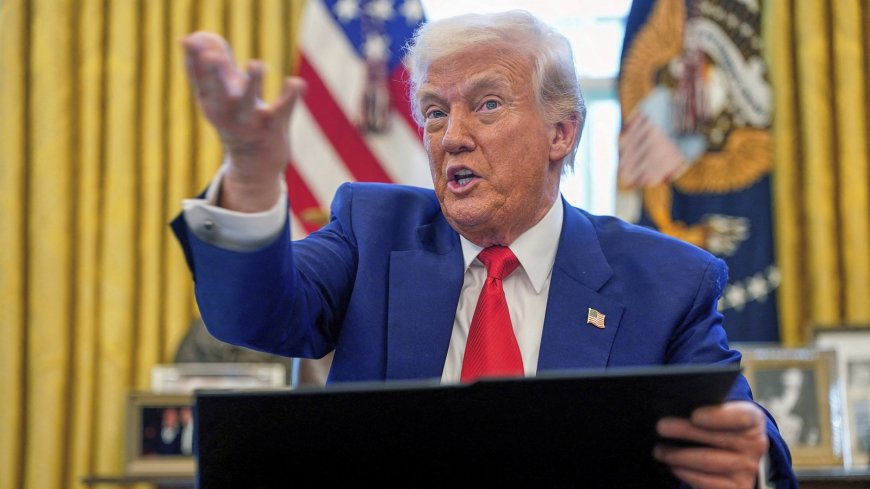
The future trajectory of the bridge project will likely hinge on the interplay between political signaling and practical necessity. The economic rationale for expanded cross-border capacity remains compelling, and the physical completion of the structure represents a sunk investment difficult for either government to disregard. Yet the episode illustrates how infrastructure, once conceived as a neutral facilitator of commerce, can become a site of contestation in an era defined by strategic competition and transactional statecraft.
Ultimately, the uncertainty surrounding the Gordie Howe International Bridge offers a revealing case study in the transformation of global economic relationships. It demonstrates how even projects grounded in mutual benefit can be reinterpreted through the lens of national advantage, and how the politics of leverage increasingly shape decisions once governed primarily by economic logic. As the bridge awaits its anticipated opening, it now stands not only as a physical connection between two nations but also as a symbol of the evolving terms under which international cooperation is negotiated in the twenty-first century.
Advertisement