Allies Form Support Group After Discovering ‘Deal With Trump’ Is Ongoing Subscription
US allies quietly reduce reliance on American trade and the dollar after repeated tariff threats from Trump. Europe signs new deals, investors buy gold, and the phrase “final agreement” receives clarification.
 Filna
Filna 
Advertisement
America’s longtime allies have reportedly begun networking without it.
Advertisement
Advertisement
Advertisement
Advertisement
After a year of tariff threats, revised tariff threats, and clarifications of earlier tariff threats, several U.S. trade partners are quietly signing agreements with one another — sometimes overlooking historic disagreements — in an effort to diversify away from what they now consider an unpredictable commercial partner.
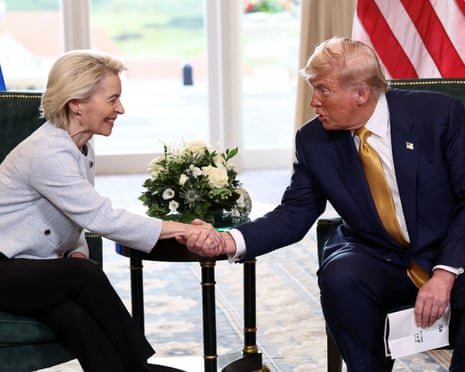
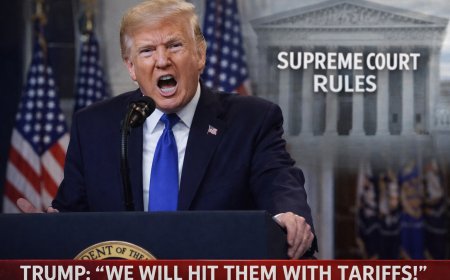
Last summer and fall, President Donald Trump leveraged the threat of new import taxes to secure trade concessions and investment pledges from the European Union, Japan, South Korea and others. The message was clear: cooperate, or face tariffs.
Many cooperated.
They have since learned that cooperation may come with automatic renewal.
The president has continued to introduce new tariffs even after agreements were reached, citing evolving priorities. What was presented as resolution has increasingly resembled an installment plan.
In response, several European governments and institutions have reduced reliance on U.S.-based digital services such as Zoom and Microsoft Teams. Central banks and global investors have begun shifting portions of their reserves from dollars into gold. The moves are incremental but symbolic — less about panic and more about hedging.
Economists note that sustained diversification away from the dollar and U.S. markets could gradually reduce American economic influence and potentially increase borrowing costs at home. For consumers already sensitive to inflation, that is less a theory than a line item.
From Washington’s perspective, tariffs remain a negotiating tool.
From allies’ perspectives, they are now a recurring feature.
The new global strategy appears straightforward:
If agreements with Washington are subject to revision, agreements with one another may offer more predictable terms.
Trade blocs recalibrate.
Investors rebalance.
Digital subscriptions diversify.
The United States remains a dominant economic force.
Its partners are simply exploring alternatives.
After all, diversification is a principle long recommended by financial advisers.
Apparently, it also applies to geopolitics.
Advertisement