Hollywood’s Silent Verdict: Clooney’s 2025 Justice Gala Exposes the Sussexes’ Vanishing Influence
At the 2025 Clooney Foundation for Justice Fall Awards, Hollywood quietly but decisively froze out Prince Harry and Meghan Markle, exposing a shift in influence, loyalty, and the industry’s growing impatience with the Sussex narrative.
 Ronald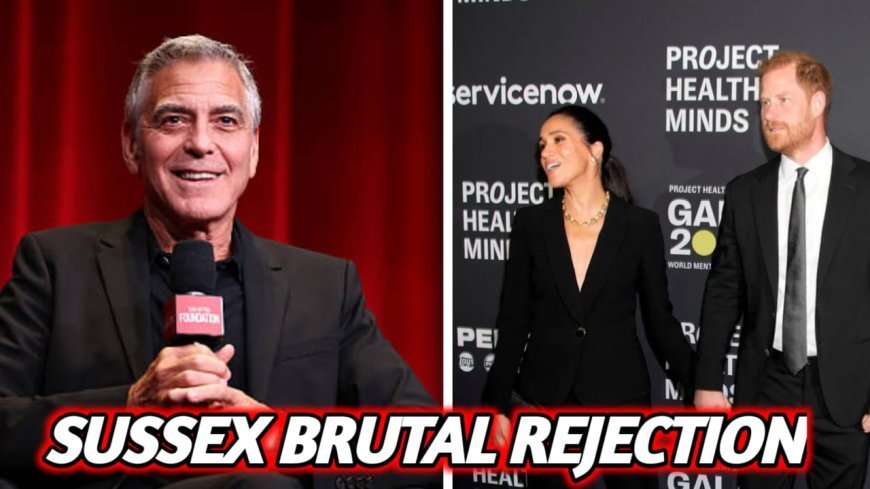
Advertisement
From the moment invitations for the 2025 Clooney Foundation for Justice Fall Awards began circulating, Hollywood insiders felt a shift brewing—one not sparked by who was attending, but by who very conspicuously wasn’t. In an industry that communicates more through silence than statements, the most cutting message is often the envelope that never arrives. And this year, the absence was unmistakable. George Clooney, hosting what many consider the most polished philanthropic event of the fall season, had curated a guest list that blended political heavyweights, high-profile human rights attorneys, award-winning filmmakers, Silicon Valley donors, and impeccably groomed CEOs. It was the kind of night where every handshake mattered and every table placement carried meaning. But the story dominating the back corridors and champagne bars wasn’t about the arrivals or the speeches. It was about two names missing from every page of the guest list: Prince Harry and Meghan Markle.
Advertisement
Advertisement
Advertisement
Advertisement
Not simply missing—excluded.
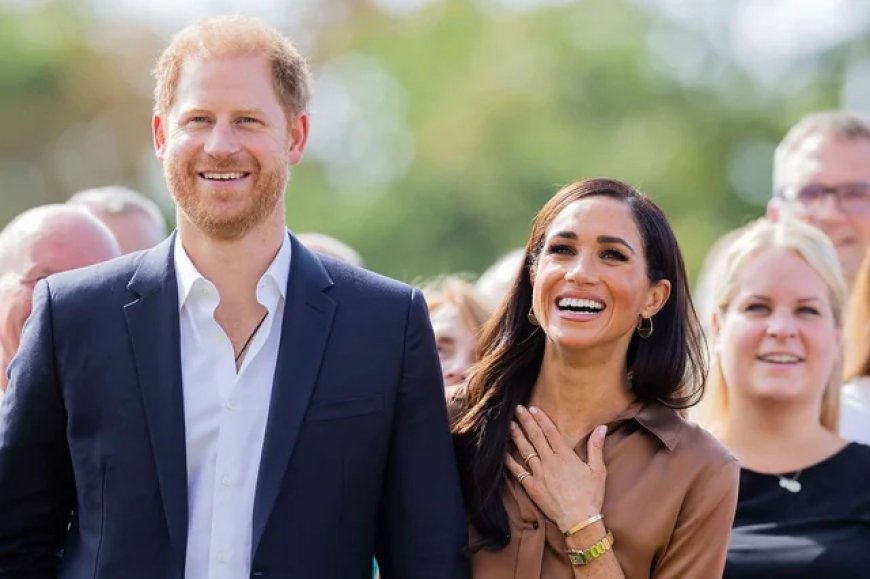
The Sussexes, who once imagined Hollywood as the warm refuge that would embrace them after their dramatic departure from the monarchy, were nowhere near the guest list this time. Their absence wasn’t an oversight. It was a message. And the industry received it with a collective smirk—not malicious, not gleeful, just the weary amusement of a town that has quietly stopped pretending. Behind the velvet ropes and the orchestral warm-ups, conversations drifted between sympathy and sarcasm. “Did Meghan really think she’d get another last-minute invite?” one studio executive murmured while adjusting a diamond cuff bracelet. “It’s the Clooney Justice Gala, not a Suits reunion.” A nearby producer laughed before chiming in, “Harry probably assumed George owed him a favor for that baby shower phase years ago.” Another voice added dryly, “Clooney doesn’t even acknowledge that era anymore. He acts like he woke up from it.”
None of it was cruel. Just honest. Brutal in the way only Hollywood can be when the cameras are off and the niceties vanish like perfume fading in the heat. Everyone in the ballroom understood the truth: the Sussexes had burned through goodwill at a breathtaking speed. Netflix had grown restless. Spotify had walked away with visible impatience. Fashion houses, once eager to dress Meghan, quietly rolled their eyes long before rolling their fabrics. Hollywood—the place the couple believed would crown them as misunderstood royalty—now regarded them the way producers treat half-finished scripts: fine to read, impossible to fund, and ultimately too exhausting to deal with.

By the time George Clooney stepped into the Beverly Hilton ballroom wearing a perfectly tailored tuxedo that looked like it had been carved onto him, the atmosphere was already buzzing with whispers. Clooney made his usual elegant rounds, offering handshakes, cheek kisses, and expertly delivered jokes that filled the air with warmth. But everything paused when a journalist, off-mic and overly curious, asked whether Harry and Meghan would be attending. Clooney’s reaction—a slight lift of the eyebrow, a diplomatic half-shrug—was enough. “They’re not part of tonight’s program,” he replied. Polite, polished, cold. The subtext echoed louder than the orchestra warming up behind him: They weren’t invited. They weren’t considered. And no, he wasn’t going to explain why.
Inside the ballroom, seating arrangements read like a map of Hollywood alliances. Amal Clooney, radiant and composed, greeted guests with her usual blend of grace and quiet authority. Her seating plan reflected the social temperature of the industry more accurately than any tabloid report. Yet the most striking thing wasn’t who sat where. It was the space where names once belonging to Harry and Meghan would have gone, had this been another year, another era, another version of reality. Once upon a time, Meghan positioned herself as a rising advocate, reciting polished talking points that sounded borrowed from memoir outtakes, while Harry embraced his role as the anti-royal royal, delivering victim-themed monologues packaged as emotional truth. For a brief moment, Hollywood indulged them. But tonight, their seats didn’t exist. Their names didn’t exist. Their presence didn’t exist. They had become ghosts of a social circle that had already moved forward without them.
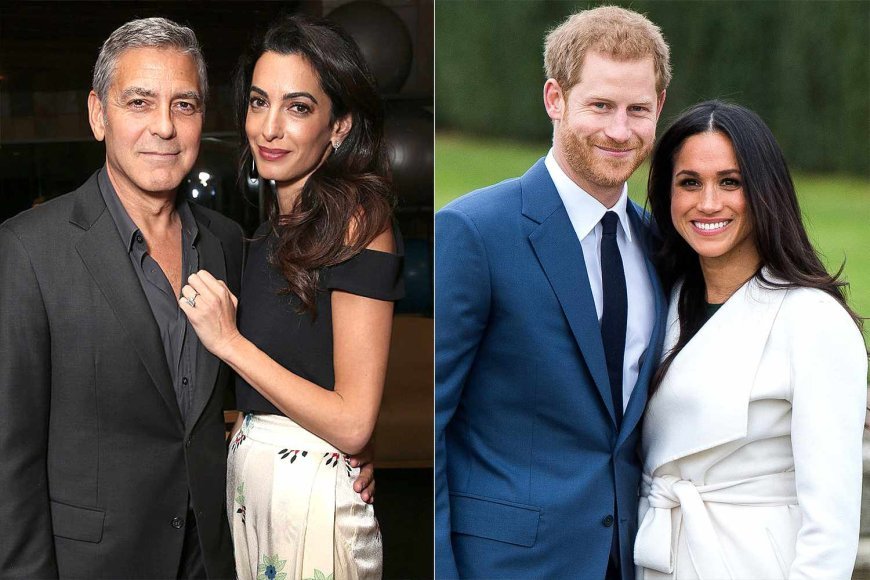
Meanwhile, in Montecito, the mood was… tense. Their team had been monitoring the Clooney event for weeks. Meghan reportedly expected an invitation—not because it was promised, but because she believed she still belonged to that world, the world where a well-timed text could open doors. Harry, depending on who you ask, was either hopeful or hopelessly naive, convinced George would never fully distance himself. They had shared dinners, posed for photos, exchanged polite jokes about the madness of royal life. George had defended them once or twice with carefully neutral statements. But this time, the silence cut through their expectations like ice. No invite. No reminder. No outreach. Their PR director checked their inbox—nothing. Their assistant triple-checked—still nothing. A desperate call to a mutual friend who used to attend dinners at Clooney’s Lake Como estate resulted in a curt, echoing line: “I don’t think they’re on the list this year. Or any year moving forward.”
Back at the gala, the night unfolded seamlessly. Journalists who broke actual global stories mingled with activists who risked their lives, while actors with critically acclaimed projects added glitter to the room. The applause was generous. The speeches were compelling. The atmosphere felt undeniably elite. Yet through it all, Harry and Meghan’s absence lingered like a whisper—felt, recognized, but pointedly ignored. At one table, a showrunner leaned toward a director. “Remember when Meghan assumed she’d be hosting this gala in a few years?” The director laughed softly. “She assumed a lot of things.” Backstage, during a sound check, a technician joked about preparing a surprise Sussex entrance. “Please,” someone replied. “They’d need someone to open the door for them.” Even security guards, in the shadows of the back hallway, traded dry jokes about “royal refugees.”
But the moment that crystallized the shift came when Amal Clooney took the stage. Her voice was steady and resonant as she delivered a speech about justice, accountability, and the courage required to advocate for the voiceless. She spoke like someone who lived the work, not someone who sprinkled activism onto a PR strategy. And with every sentence she delivered, it became more apparent that Meghan’s carefully curated buzzwords no longer fit into rooms like this. Harry’s grievance-laden memoir tone didn’t fit either. Their Netflix docuseries—saturated with self-pity and polished frustration—felt embarrassingly out of place compared to the genuine humanitarian efforts celebrated in that ballroom.
Toward the final hour of the gala, a PR manager leaned toward a senior producer. “Do you think Harry and Meghan know they’re done here?” The producer smirked, swirling the last of their drink. “They will when the photos drop.” A passing executive overheard and muttered, “They already know. You can feel the panic coming from Montecito.”
By the time George Clooney made his way out of the ballroom, surrounded by Amal and a small circle of advisors, a journalist called out one last question: “Any message for Harry and Meghan tonight?” Clooney smiled—calm, courteous, immovable. “Tonight is for the people doing the work.” That was all. The line was harmless in print, ice-cold in person.
Back in Montecito, when the first red carpet images appeared online, Meghan reportedly went silent. Harry stared at the glowing screen with the familiar look of someone watching a door close they didn’t realize had already been locked. Their team scrambled to construct a distraction—maybe a new initiative, maybe a baby rumor, maybe a recycled charity announcement—but none of it mattered. The truth had landed.
Hollywood had cut them out.
Not loudly. Not dramatically. Surgically.
And in a town where reputations shift by the hour, nothing is more fatal than becoming exhausting. By dawn, the whispers had hardened into consensus. The 2025 Clooney Foundation for Justice Fall Awards marked the moment Hollywood—not tabloids, not courtiers, but Hollywood itself—quietly stepped away from the Sussexes. No spectacle. No public statement. Just exclusion. The kind that hurts most.
The kind that says, without saying it:
“We don’t need you. We don’t want you. We’ve moved on.”
Advertisement