Global Economy Briefly Pauses As Elon Musk’s Net Worth Hits $852 Billion And Achieves Escape Velocity
Small nations quietly re-evaluate their GDP strategy as Elon Musk’s net worth reaches $852 billion following the SpaceX–xAI merger. The “Muskonomy” now reportedly earns $698 million per day in theoretical gravity.
 Ronald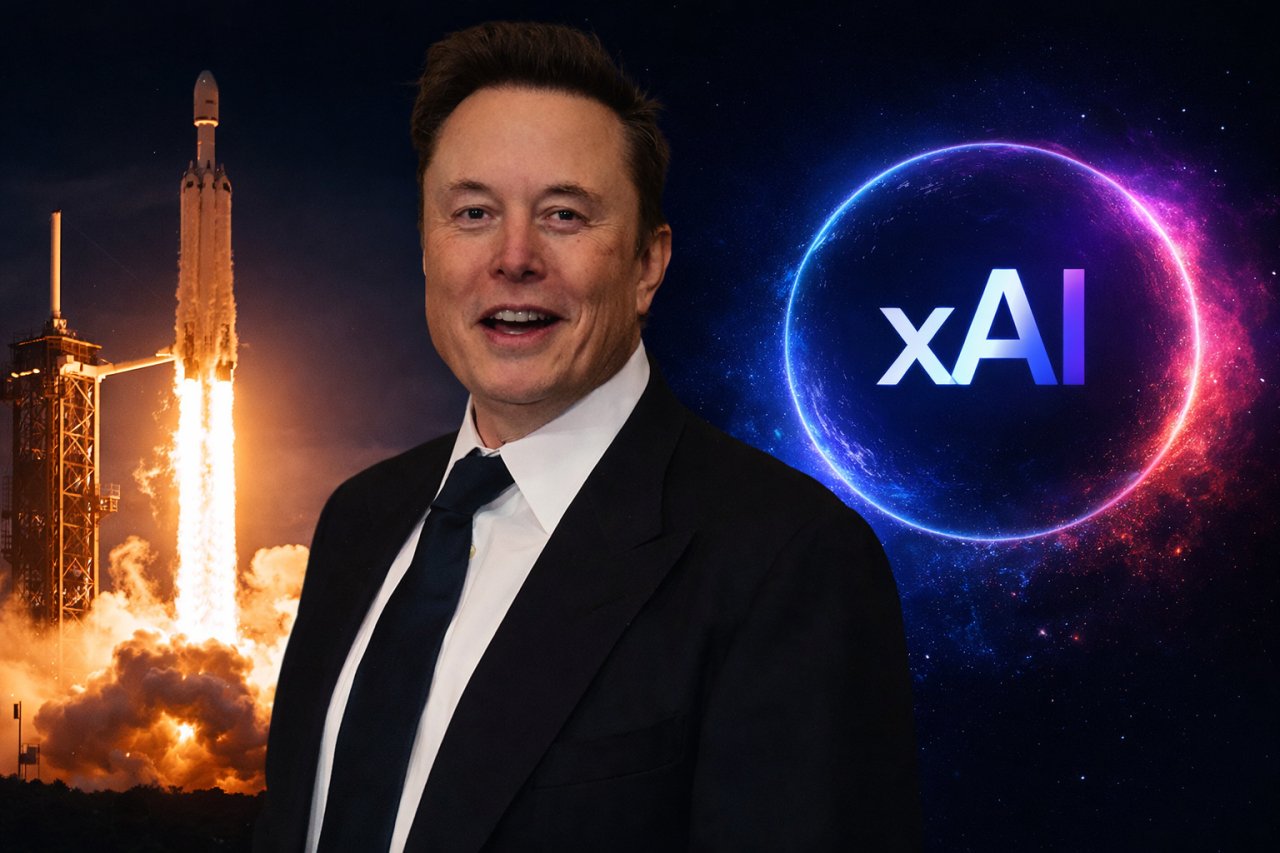
Advertisement
BOCA CHICA, TX — The global economy briefly checked its pulse Sunday after Elon Musk’s personal net worth surged to an estimated $852 billion, confirming that traditional billionaires are now considered entry-level wealth enthusiasts.
Advertisement
Advertisement
Advertisement
Advertisement
The milestone follows the so-called “Stargate Consolidation,” the merger of SpaceX and xAI into a vertically integrated $1.25 trillion entity. By embedding Grok AI within Starlink’s orbital infrastructure, Musk has reportedly created what analysts are calling a “Space-Based Brain” — a system that exists somewhere between a data center and a Bond villain origin story.
With a 43% ownership stake in the newly consolidated enterprise, Musk’s share is valued at over $540 billion. For context, that is approximately the GDP of several countries and at least one fictional empire.
Tesla, once the primary engine of his fortune, has been demoted to “supporting actor” in the Musk Cinematic Universe.
The $698 Million Daily Hobby
While headlines highlight Musk’s $698 million average daily increase, financial strategists insist that calling it “income” is reductive.
“He’s not earning money,” one analyst explained. “He’s experiencing asset gravity.”
On particularly energetic market days — such as the recent Robotaxi expansion announcement — Musk’s net worth has reportedly fluctuated by tens of billions within 24 hours. At this scale, volatility resembles a rounding error.
Traditional employment metrics are no longer relevant. Time itself is now denominated in Musk Units.
Tesla’s Pivot: From Cars To Robots Who Build The Cars
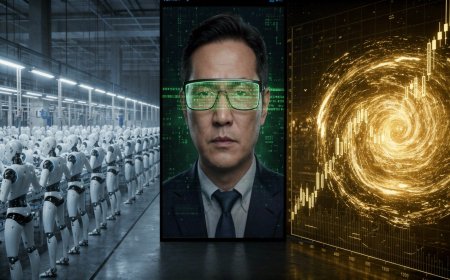
Tesla’s market capitalization, hovering near $1.5 trillion, has stabilized after transitioning from “electric car company” to “robotics deployment platform.”
The rollout of 1,000 Optimus Gen-3 humanoid workers this spring is projected to reduce operating costs dramatically. Automotive revenue dips are considered charming nostalgia.
Efficiency gains now move markets. Every robot activation is essentially a dividend in titanium form.
Musk’s reinstated compensation package and new incentive structures ensure that ownership concentration remains an evolving art form.
X Money: Because Currency Needed Rebranding
The stabilization of X (formerly Twitter) into “X Money” completes the Muskonomy triangle.
By integrating predictive AI into payment systems, the platform reportedly anticipates spending patterns — capturing transaction flows with the kind of efficiency usually reserved for science fiction or dystopian literature.
Critics warn that one individual simultaneously overseeing global satellite infrastructure, advanced AI, space launch dominance, robotics manufacturing and financial plumbing could represent a structural risk.
Markets disagree.
Investors have largely concluded that if one must choose a sovereign entity, it might as well be a charismatic one.
The Trillionaire Countdown
At $852 billion, the conversation has shifted from if Musk becomes the world’s first trillionaire to which Tuesday.
Prediction markets suggest a strong probability of a $1 trillion valuation before mid-2026. Should the SpaceX–xAI IPO reach projected targets, Musk’s net worth could climb far beyond that.
At $1.5 trillion, daily fluctuations would likely exceed $1 billion.
At that point, seconds become expensive.
And economists everywhere will gently update their spreadsheets.
The Muskonomy does not sleep.
It compounds.
Advertisement