White House Accidentally Implements 900-Page Plan It ‘Never Heard Of’
After distancing himself from Project 2025, Trump’s second term mirrors more than half of the Heritage Foundation’s 900-page blueprint. Immigration crackdowns, federal layoffs and foreign policy shifts now look familiar.
 Filna
Filna 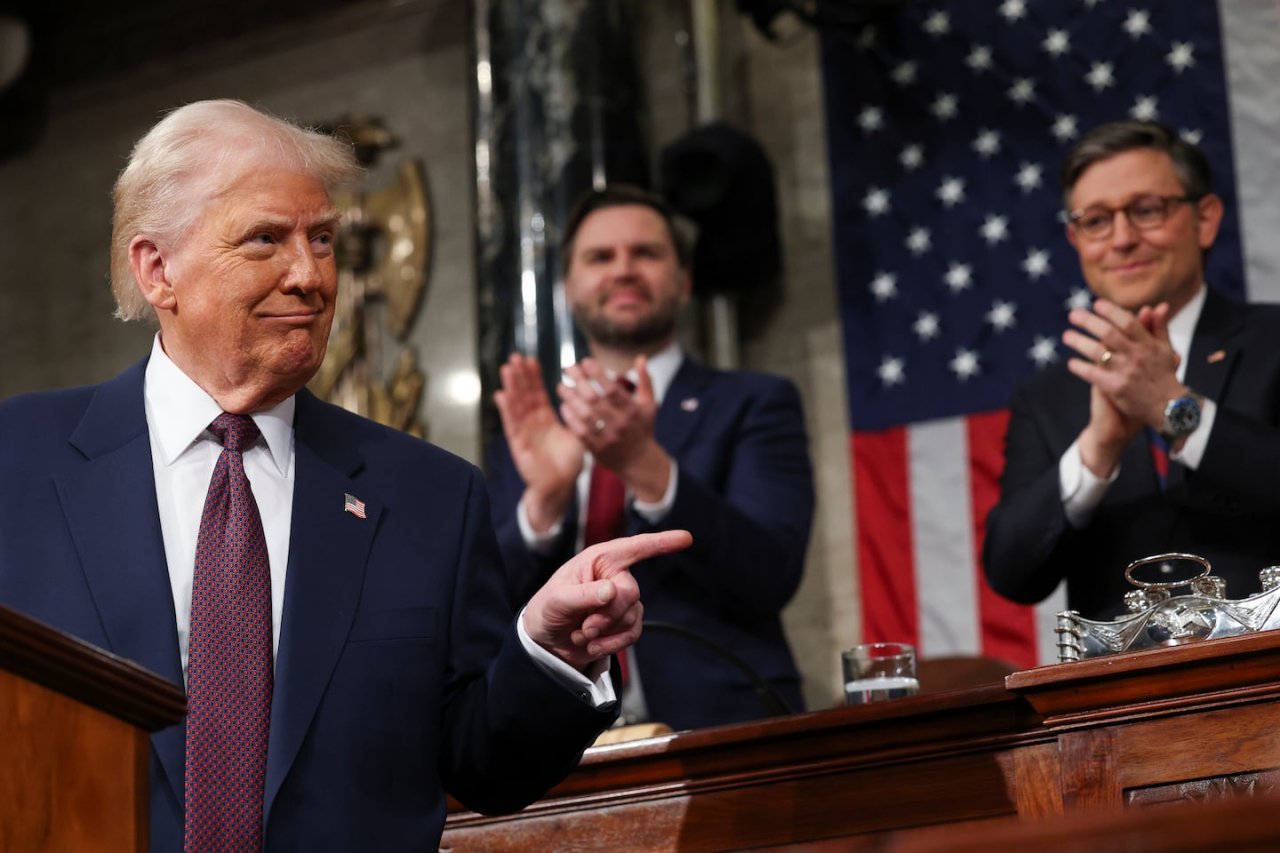
Advertisement
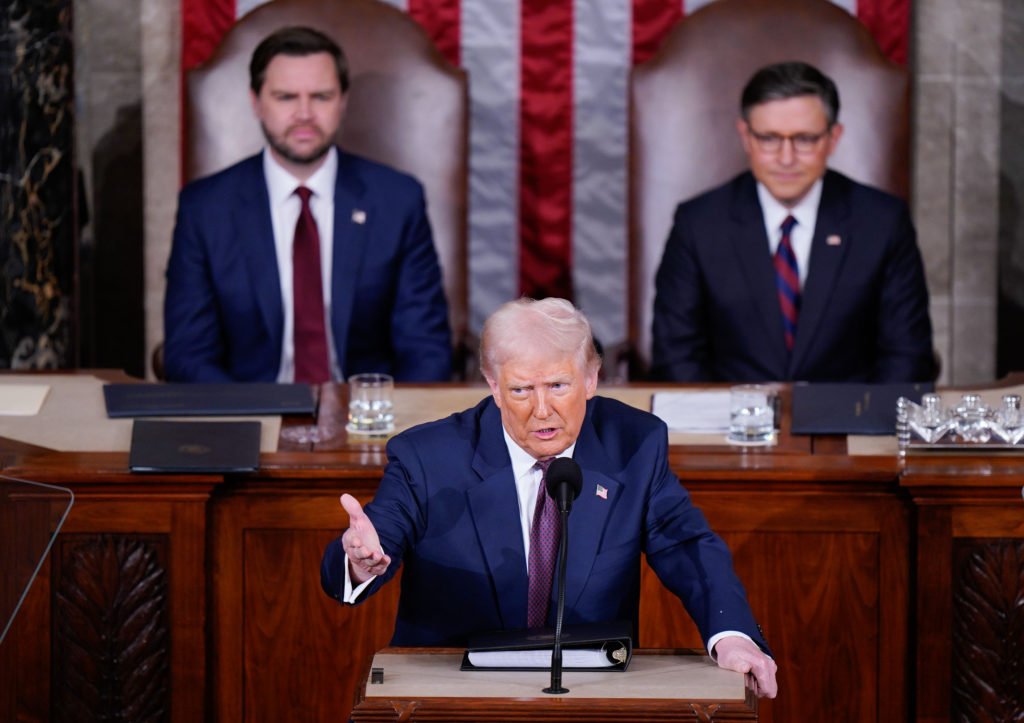
When President Donald Trump delivers his State of the Union address, he is expected to highlight border enforcement, foreign policy shifts, federal workforce reductions and sweeping administrative changes.
Advertisement
Advertisement
Advertisement
Advertisement
One phrase unlikely to appear in the speech: Project 2025.
Months before the 2024 election, Trump publicly distanced himself from the 900-page policy document published by the Heritage Foundation, stating he had “no idea who is behind it” and disagreed with some of its proposals. The document, titled Mandate for Leadership, laid out an ultra-conservative governing framework centered on expanding presidential authority, reducing the federal workforce and reshaping immigration and foreign policy.
Now, as Trump’s second term unfolds, many of those proposals have materialized.
Analyses by liberal-leaning groups tracking the administration’s actions estimate that roughly half of the Project 2025 recommendations — between 51% and 53%, depending on methodology — have either been initiated or completed.
Among enacted proposals:
• A halt to billions of dollars in foreign aid
• Elimination of federal diversity, equity and inclusion programs
• Expanded immigration enforcement measures
• Termination of federal funding for NPR and PBS
The immigration section of Project 2025 proposed authorizing military personnel to secure borders, ending protected enforcement zones such as schools and churches, expanding workplace raids and increasing detention capacity — policies that have since been implemented.
In the early days of Trump’s second term, the Department of Government Efficiency (Doge) aggressively reduced federal staffing levels. The administration also placed the United States Agency for International Development under State Department oversight — moves aligned with the blueprint’s recommendations for consolidating executive power.
Heritage Foundation officials have downplayed suggestions that the administration is directly following their document, emphasizing that policy decisions rest solely with the president and his team.
Still, outside observers note that Project 2025 did more than outline ideological goals. It provided legal and administrative pathways for achieving them. As one policy analyst described it, the document functioned as a detailed roadmap for restructuring government operations.
Foreign policy developments have also reflected elements of the plan. While Project 2025 stopped short of explicitly calling for the removal of Venezuela’s President Nicolás Maduro, it advocated strong measures against what it described as Communist influence in the region. The administration later escalated actions regarding Venezuela. The broader National Security Strategy has also emphasized competition with China and framed global alignments in binary terms.
So the narrative now stands as follows:
A 900-page blueprint publicly dismissed.
A second term featuring many of its proposals.
A president crediting his own agenda.
A think tank emphasizing coincidence.
Whether labeled coincidence, convergence or quiet coordination, the overlap remains measurable.
Project 2025 may not headline the speech.
Its chapters, however, are already being read aloud.
Advertisement