
AI-Driven Tax Optimization: Using Algorithms to Legally Erase Your 2026 Tax Bill
Stop overpaying the IRS. Discover how AI-driven tax optimization and autonomous algorithms are helping entrepreneurs legally erase their 2026 tax bills. We explore real-time expense categorization, AI-powered R&D credit capture, and automated jurisdictional shifting for maximum tax efficiency.
 Ronald
Advertisement
In the fiscal landscape of 2026, the most expensive mistake an entrepreneur can make is relying on a traditional, once-a-year tax filing. The tax code has become too complex and too fast-moving for human processing alone. To protect your revenue and hit the $50,000 monthly profit milestone, you must implement AI-Driven Tax Optimization. This is not about evasion; it is about using Enterprise AI Solutions to leverage every legal deduction, credit, and jurisdictional advantage in real-time.
Advertisement
Advertisement
Advertisement
Advertisement
The Shift from Reactive to Predictive Tax Planning
Traditional accounting is reactive—you look at what happened last year and try to mitigate the damage. Financial Automation in 2026 has flipped this model. Modern AI tax engines use B2B SaaS Integration to plug directly into your bank feeds, payroll, and inventory systems. These algorithms perform "Continuous Tax Sensitivity Analysis," simulating your tax liability every time you make a transaction. If a specific purchase can be reclassified to trigger a higher depreciation schedule, the AI flags it instantly, ensuring your books are optimized for zero-tax liability before the quarter even ends.
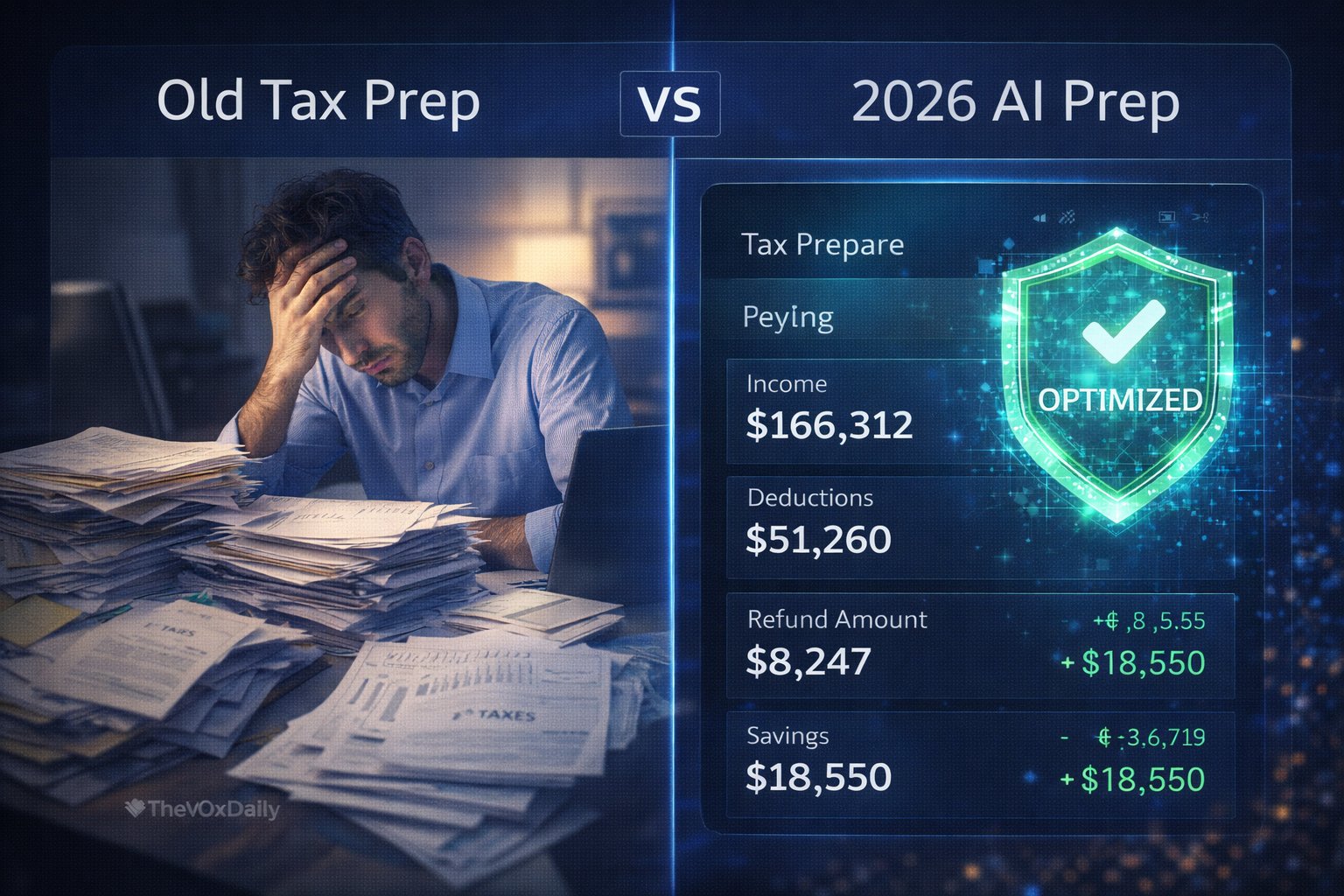
Comparison of traditional manual tax preparation versus 2026 autonomous AI-driven tax optimization.
Automated R&D Credit Capture: The "Hidden" Gold Mine
One of the most powerful features of 2026 tax AI is the ability to hunt for Research and Development (R&D) tax credits. Historically, claiming these credits required weeks of manual documentation and engineer interviews. Today, Enterprise AI Solutions like Neo.Tax and Corvée crawl your project management tools (like Jira or GitHub) to identify code commits and product iterations that qualify as "innovation."
By automatically mapping these activities to the IRS's four-part test, these tools can uncover hundreds of thousands of dollars in credits that would otherwise go unclaimed. For a tech-heavy startup, these credits can effectively wipe out a corporate tax bill, turning a potential liability into a massive cash injection for scaling.
Agentic Jurisdictional Shifting
For the global entrepreneur, 2026 offers the ability to utilize "Agentic Jurisdictional Shifting." As we discussed in our offshore banking series, different countries offer different tax incentives. Financial Automation tools now exist that can analyze your digital "Permanent Establishment" (PE) risk. These AI agents monitor where your servers are located, where your employees are logging in from, and where your revenue is being generated.
The AI then suggests the optimal corporate structure to ensure your income is routed through the most tax-neutral pathways. This is B2B SaaS Integration at its most advanced level—software that acts as a global tax architect, ensuring you pay the lowest legal rate across 50+ different jurisdictions.

AI-driven global tax routing map showing jurisdictional optimization for international business entities.
Real-Time Expense Categorization and Audit Defense
The "Audit Fear" is the primary reason many entrepreneurs don't take aggressive (but legal) deductions. In 2026, Financial Automation has solved this through "Explainable AI." When the algorithm categorizes a luxury dinner as a "Business Networking Event," it automatically attaches the calendar invite, the LinkedIn profiles of the attendees, and a summary of the business discussed to the transaction record.
This creates an "Audit-Ready" fortress. If the IRS or local tax authority ever questions a deduction, you don't need to hunt for receipts; you simply grant them access to a read-only portal where the AI presents the undeniable evidence for every single cent deducted. This level of transparency ironically provides the best protection for aggressive tax-saving strategies.
The 2026 AI Tax Stack: Essential Tools
- April: An embedded AI tax filing system that integrates directly into your payroll to handle real-time withholdings and deductions.
- Blue J Tax: A predictive model that uses "Legal Forecasting" to tell you how a court would likely rule on a specific tax position before you take it.
- Zeni: A full-stack AI finance room that manages bookkeeping, tax, and fractional CFO services in one automated dashboard.
Conclusion: Wealth Preservation is the New Wealth Creation
Making $50,000 a month is a significant achievement, but keeping $50,000 a month is what builds a legacy. AI-Driven Tax Optimization is the ultimate defensive play for the modern founder. By treating your tax bill as a variable to be solved by an algorithm rather than a fixed cost of doing business, you unlock capital that can be reinvested into further AI Wealth opportunities.
Stay tuned to The Vox Daily for more in-depth strategies on 2026 financial automation and wealth building.
Advertisement