Donald Trump Discovers ‘Bro Culture’ Has a Mute Button After Super Bowl and Meme Misfires
After attacking Bad Bunny’s Super Bowl performance and sharing controversial social media posts, Donald Trump appears to be losing ground among young voters and minority groups.
 Filna
Filna 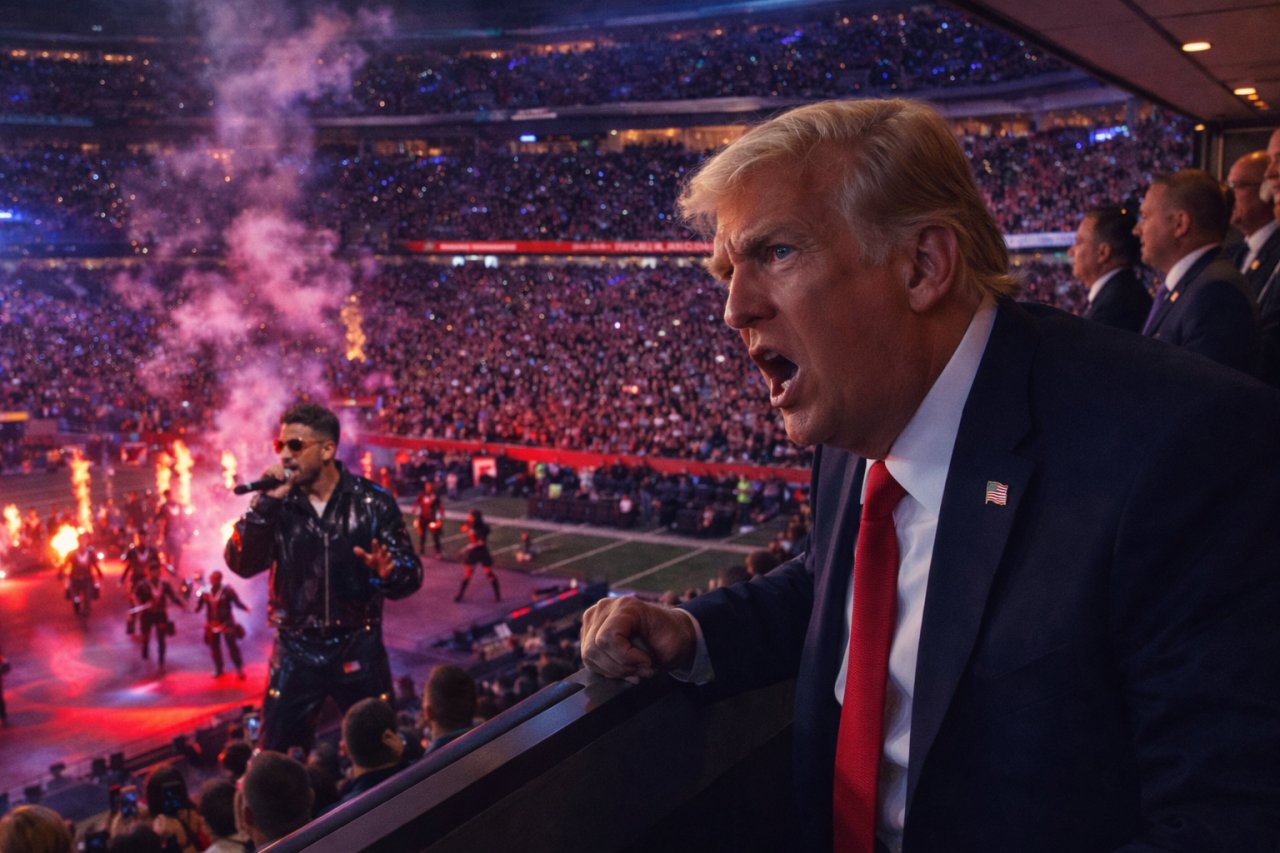
Advertisement
For years, Donald Trump cultivated what could generously be described as a bro-adjacent cultural orbit — a blend of meme warfare, locker-room bravado, and algorithm-friendly swagger.
Advertisement
Advertisement
Advertisement
Advertisement
Now, that orbit appears to be experiencing gravitational instability.
The recent sequence: a racially charged post involving the Obamas, aggressive rhetoric around immigration enforcement, and an attack on Puerto Rican superstar Bad Bunny following his Spanish-language Super Bowl halftime performance — a show watched by nearly 130 million viewers.
If the goal was broad appeal, the math may require recalculation.
The Super Bowl That Wasn’t Supposed to Be Political (Until It Was)
The Super Bowl has historically served as one of the few events capable of uniting Americans across ideological lines. This year’s halftime show featured Bad Bunny delivering a colorful performance celebrating Latino culture.
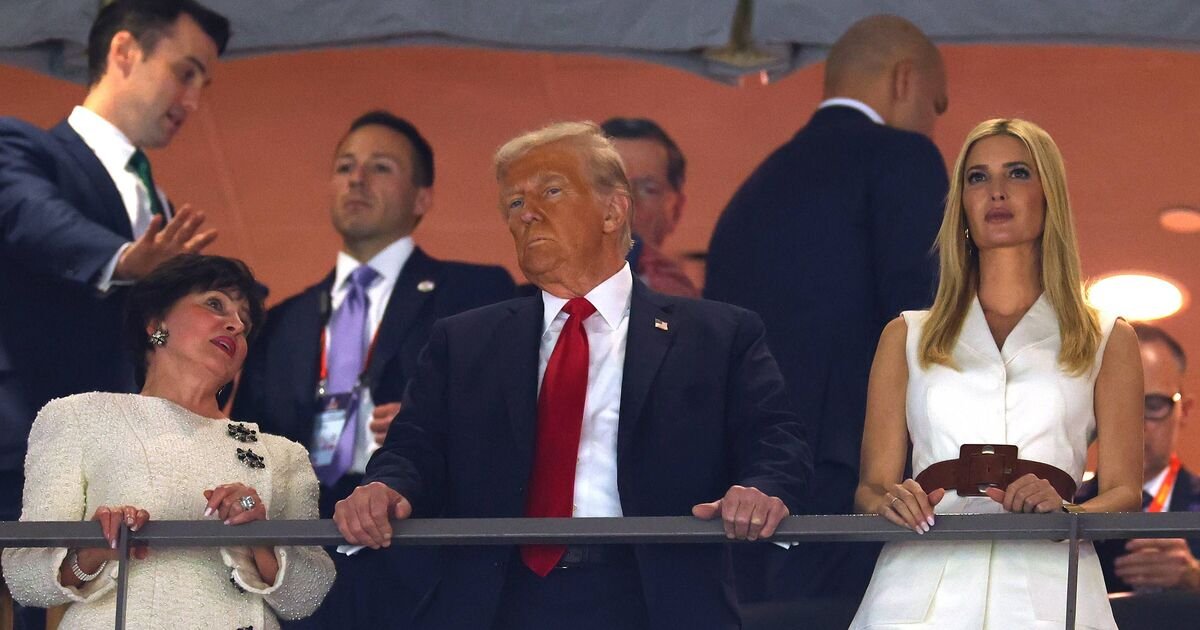
Trump’s response?
“Nobody understands a word this guy is saying,” he wrote, calling the performance “an affront to the greatness of America.”
In a country with more than 40 million Spanish speakers.
The criticism arrived amid ongoing national debates over immigration enforcement — including heightened scrutiny of federal crackdowns. Observers noted that Trump’s comments effectively politicized what had been, for most viewers, a festive moment.
An 80-20 issue, perhaps. Just not the way advertised.
Meme Strategy, Now With Fewer Laughs
Trump has long relied on social media as both megaphone and battleground — posting memes, AI-generated videos, and cultural commentary tailored to his core base.
But critics argue the tone has shifted.
A controversial video shared on Truth Social portraying former President Barack Obama and Michelle Obama as apes drew backlash before being removed roughly 12 hours later. The post amplified concerns that the administration’s messaging is increasingly alienating voters outside its most loyal audience.
What once played as provocation-with-a-wink now reads, to some, as blunt-force identity politics.
Humor, as it turns out, is context-sensitive.
The Generational Slide
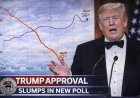
Polling trends suggest Trump has been losing ground among minority voters and 18-to-30-year-olds — groups already trending away from him during his first term.
The Bad Bunny episode landed at a moment when younger voters, particularly within Latino communities, were paying close attention.
Cruelty may energize a base.
It rarely expands one.
The Bro Culture Equation
Trump’s online persona still traffics in masculinity-coded aesthetics: memes, fight metaphors, UFC partnerships, and algorithmically optimized bravado.
But cultural ecosystems evolve.
What once felt rebellious now competes with shifting generational values, demographic realities, and a media landscape less amused by repetition.
Support within that loosely defined “bro culture” lane may not be vanishing.
But it appears less automatic.
The Current Scorecard
Super Bowl commentary: controversial.
Meme backlash: measurable.
Youth approval: slipping.
Minority outreach: complicated.
Tone: escalating.
Moments of unity in America may be rare.
But halftime performances are not typically where administrations choose to draw battle lines.
In the modern political marketplace, branding matters.
And while the memes continue, the audience appears increasingly selective about who’s still laughing.
Advertisement