Trump Furious as Keir Starmer “Sits on Fence,” Diego Garcia Becomes World’s Most Awkward Airbnb
Donald Trump fumes after Keir Starmer hesitates over Diego Garcia strikes on Iran, while friendly fire downs F-15s and the “special relationship” enters couples therapy.
 Ronald
Advertisement
Ladies and gentlemen, gather around for today’s episode of “The Special Relationship: Now Streaming in 4K Dysfunction.”
Advertisement
Advertisement
Advertisement
Advertisement
In what can only be described as a geopolitical soap opera written by caffeine and unresolved daddy issues, Donald Trump has informed The Telegraph that he is “very disappointed” in Keir Starmer for initially blocking U.S. access to Diego Garcia — yes, that tiny but extremely strategic speck in the Chagos Islands that suddenly became the world’s most controversial Airbnb listing.
Apparently, the former and possibly future Commander-in-Chief wanted to use the base for strikes on Iran, and Starmer had the audacity — the sheer, British-tea-drinking audacity — to hesitate.
You see, the UK Prime Minister tried to master the ancient political art of Fence Sitting™. Publicly, he insisted Britain wasn’t involved in offensive operations. Privately, jets were “defensive.” But only slightly offensive. Like, offensively defensive. You know, the kind of military action that politely knocks before blowing up missile launchers.
Not regime decapitation strikes.
Just… mild explosions. With manners.
Naturally, this caused Trump to erupt like a volcano wearing a red tie.
According to him, Britain has never denied U.S. use of the base before. Which in Trumpian translation means:
“How dare you read the fine print now?”
And let’s be clear — Diego Garcia may host U.S. forces, but it remains sovereign British territory. Which means technically, Washington still has to ask nicely. And apparently “ask nicely” is not currently trending in American foreign policy.
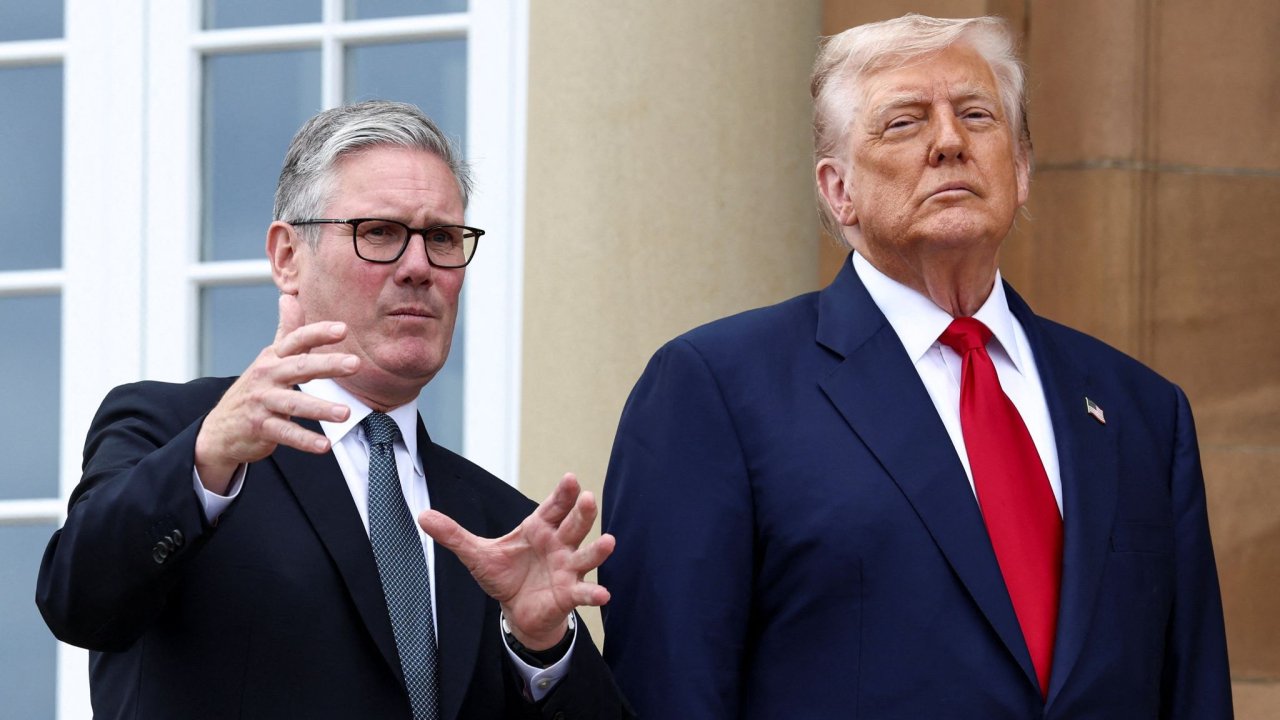
Meanwhile, Starmer finds himself trapped between two forces:
-
An unpredictable superpower ally.
-
His own backbench MPs who would rather juggle grenades than endorse another Middle East escalation.
He could have gone full Spain and declared, like Pedro Sánchez, “Absolutely not.”
Instead, he chose the political equivalent of hovering over the “Send” button for three weeks.
And while this diplomatic dance was unfolding, because the universe enjoys irony, breaking news arrived from Kuwait: multiple F-15 fighter jets were reportedly shot down by friendly fire.
Yes. Friendly.
Nothing says “precision military excellence” like accidentally downing your own aircraft. At approximately $100 million per jet — not billion, though someone confidently tried that math on live television — that’s one very expensive misunderstanding.
Three aircraft. Six crew members. Thankfully safe.
But still, imagine explaining that invoice.
“Sir, what happened to the jets?”
“Well… technically… we attacked ourselves.”
And this is all happening while Britain debates whether to let America use its base to strike Iran, while politicians argue semantics over “defensive offensives,” while the so-called special relationship now resembles a couple arguing over who controls the Netflix password.
The truth? The UK relies heavily on U.S. military infrastructure — from Trident nuclear systems to submarine partnerships. The U.S. relies on UK territory for global reach. It’s less a romance and more a co-dependent roommate situation with nuclear codes.
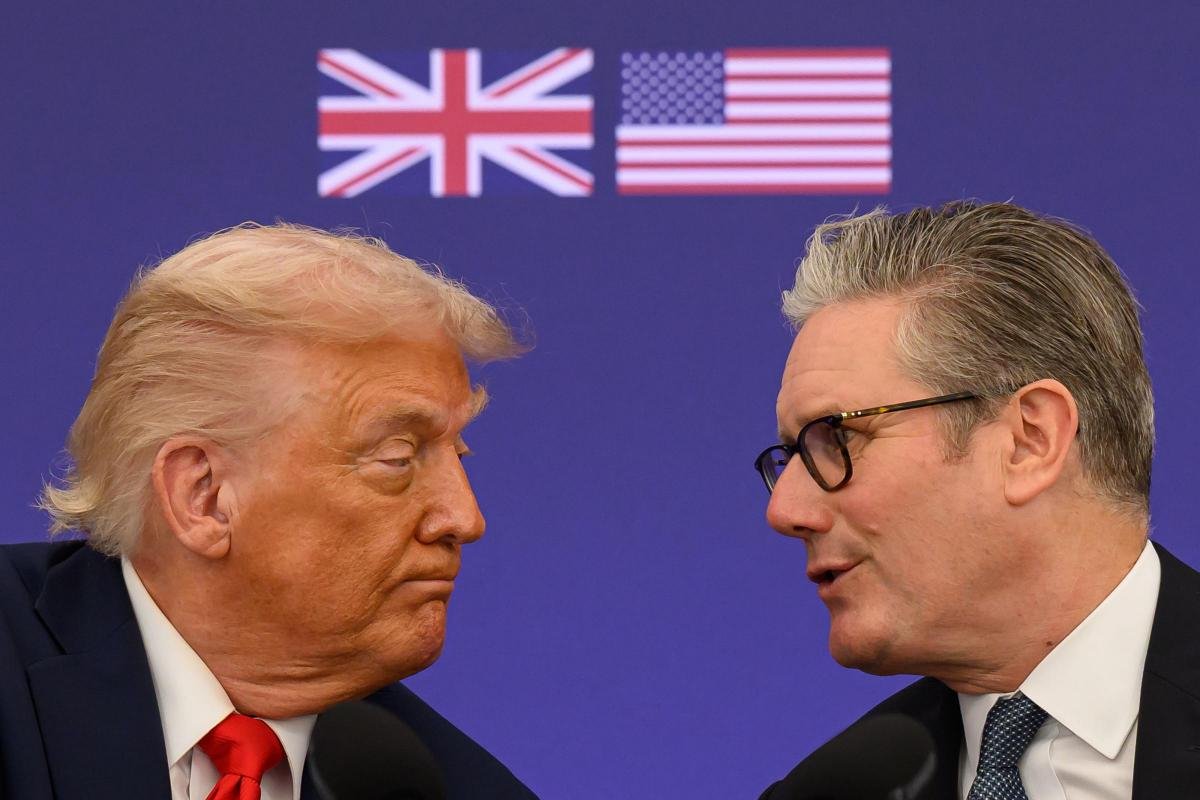
And at the center of it all is Donald Trump, furious that Britain didn’t instantly greenlight his operational wishlist, and Keir Starmer, trying to appear steady while balancing on a diplomatic tightrope stretched over a flaming oil field.
So here we are.
The Middle East simmers.
Jets fall from the sky.
Bases become bargaining chips.
And the “special relationship” needs couples therapy.
But don’t worry. Everything is under control.
Probably.
This has been another perfectly stable chapter in modern geopolitics — where fences are sat on, allies are scolded in newspapers, and friendly fire costs more than your national education budget.
Welcome to 2026.
And remember: it’s only a crisis if someone admits it is.
Advertisement