Trump State Department Official Aligns with Europe’s Far Right in Escalating Transatlantic Ideological Rift
A senior Trump administration official’s engagement with Europe’s far right signals a widening ideological divide between Washington and liberal democracies across the EU.
 Ronald
Advertisement
The emergence of a senior U.S. State Department official as a prominent critic of European migration and speech regulation policies marks a consequential shift in the tone and direction of transatlantic relations under President Donald Trump. Sarah B. Rogers, serving as undersecretary of state for public diplomacy, has moved beyond conventional diplomatic engagement to become an outspoken figure aligned rhetorically with segments of Europe’s far-right political landscape. Her public interventions on migration, hate speech legislation, and European governance reflect a broader recalibration of American foreign policy messaging, one that challenges the normative foundations of liberal democracy that have historically underpinned U.S.–European cooperation.
Advertisement
Advertisement
Advertisement
Advertisement

Rogers occupies a role originally conceived to strengthen connections between the United States and foreign publics through cultural diplomacy, strategic communication, and soft power engagement. Established at the end of the twentieth century amid optimism about democratic expansion, the position was designed to reinforce shared political values across democratic societies. The evolution of the office’s public posture under the Trump administration therefore represents more than a change in messaging style; it signals a transformation in the conceptual purpose of public diplomacy itself, shifting from consensus-building to ideological contestation.

Since assuming office, Rogers has engaged with far-right political actors across Europe while simultaneously criticizing European governments’ enforcement of hate speech laws and migration policies. Her public statements, particularly those disseminated through social media, have amplified narratives commonly associated with nationalist and anti-immigration movements. In doing so, she has positioned the United States not as a neutral observer of Europe’s internal political debates but as an active participant in them. This posture represents a departure from the traditional diplomatic practice of maintaining institutional distance from domestic political factions within allied states.
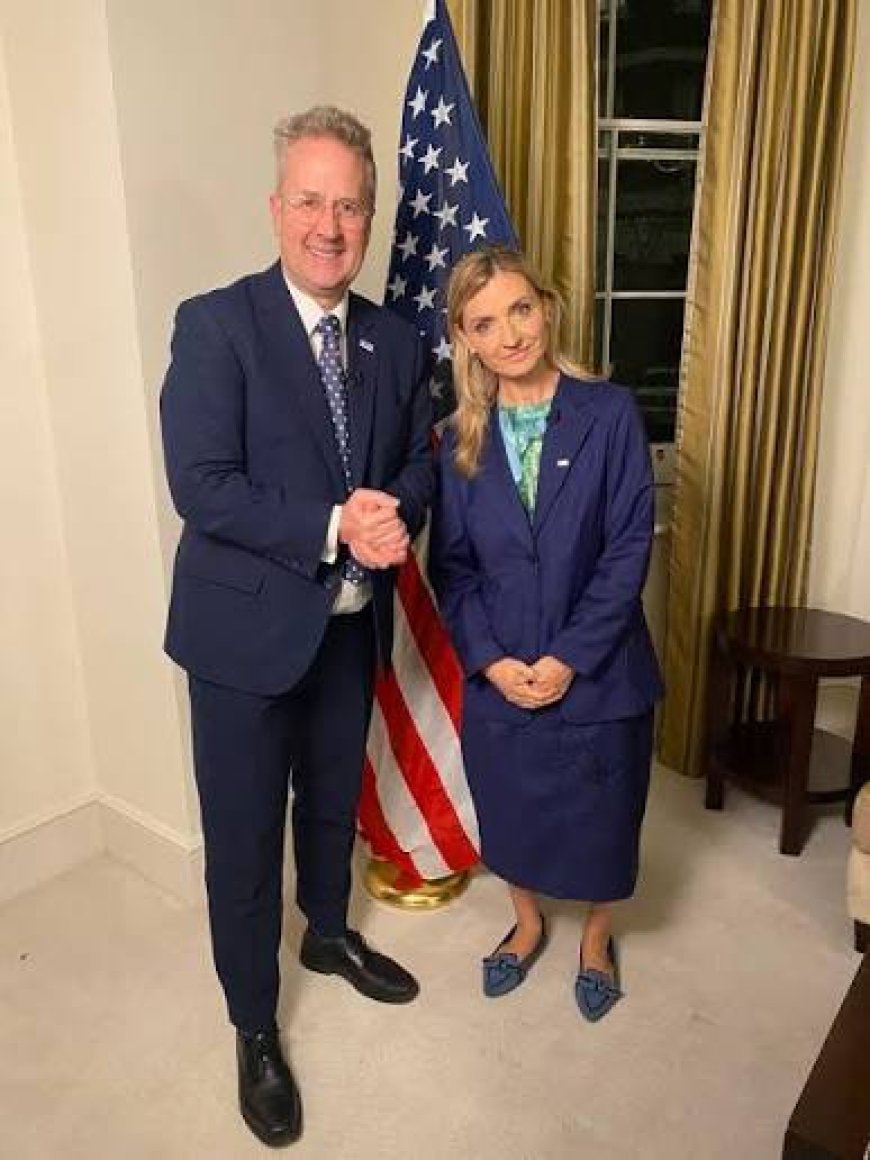
The rhetorical intensity of Rogers’s commentary has drawn attention not only for its content but for its institutional implications. By framing migration in stark civilizational terms and challenging the legitimacy of regulatory frameworks governing online speech, her messaging intersects with broader global debates over sovereignty, information control, and the limits of pluralism. Her defense of language that European authorities might categorize as incitement or disinformation underscores a fundamental divergence in regulatory philosophy between the United States and the European Union. Whereas European legal frameworks often treat speech regulation as a safeguard of democratic stability, Rogers’s public stance reflects an American political tradition that prioritizes expressive freedom even when it collides with social cohesion concerns.
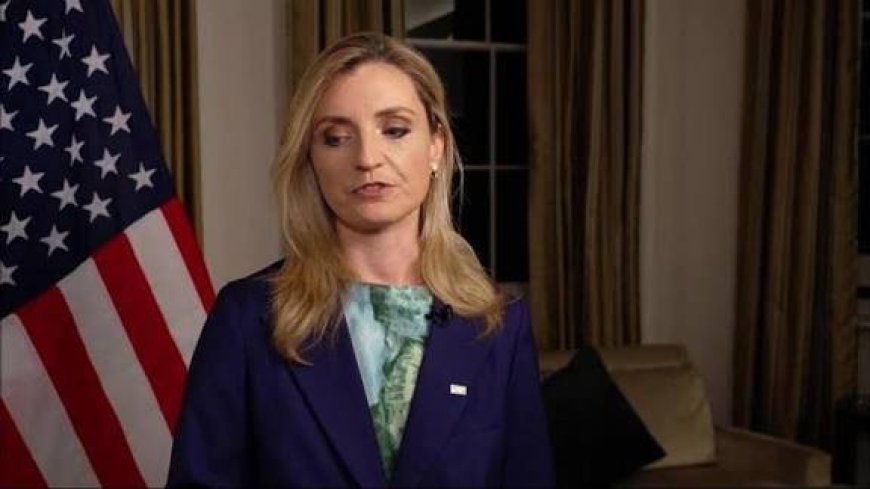
Observers of European far-right movements have interpreted these developments as evidence of a strategic alignment between elements of the Trump administration and nationalist political actors abroad. Scholars specializing in the study of populist and anti-establishment movements have noted that the amplification of such narratives by senior American officials carries symbolic weight that extends beyond bilateral diplomacy. When a high-ranking U.S. diplomat publicly echoes themes prevalent within European far-right discourse, it confers a degree of legitimacy upon those movements while simultaneously reframing the ideological landscape of transatlantic engagement.
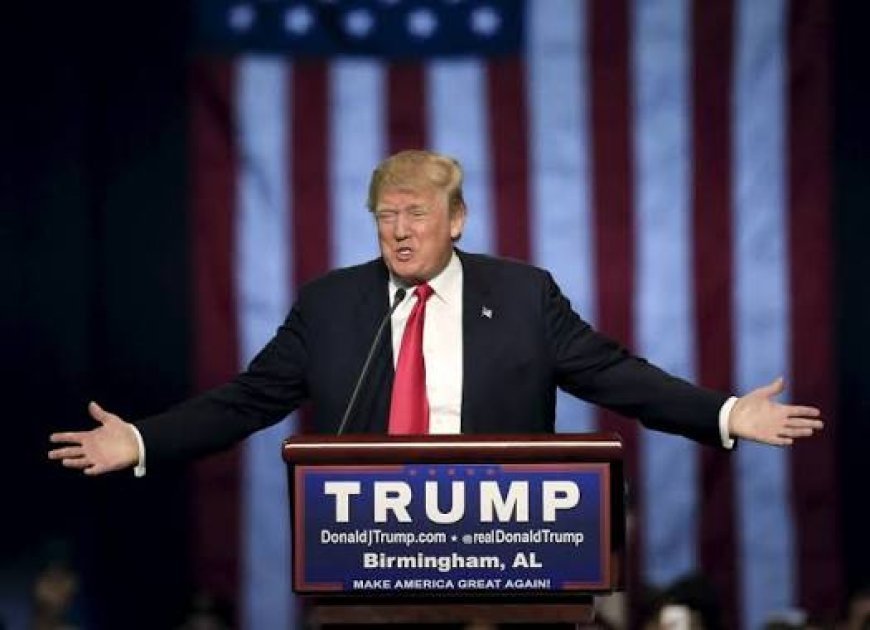
This dynamic unfolds against a backdrop of intensifying tension between Washington and European institutions over trade, defense commitments, and regulatory policy. President Trump’s recent criticism of the European Union and NATO has already strained traditional alliance frameworks. Rogers’s public interventions deepen this strain by shifting the arena of disagreement from policy disputes to foundational questions about democratic governance and societal organization. The resulting friction reflects a broader transformation in international relations in which ideological affinity increasingly competes with institutional alliance as a determinant of cooperation.
The internal political context within the United States further shapes the significance of this development. Trump’s governing approach has frequently emphasized confrontation with established institutions, both domestic and international, positioning his administration as a challenger to what it portrays as entrenched bureaucratic and elite structures. The extension of this posture into the realm of public diplomacy suggests an effort to construct a transnational ideological network that transcends conventional diplomatic channels. Rather than reinforcing institutional partnerships between governments, this strategy appears oriented toward cultivating alignment among political movements and constituencies that share skepticism toward liberal democratic norms.
European responses to this evolving posture remain complex and varied. While mainstream political leadership across the European Union continues to emphasize institutional cooperation with Washington, the visibility of American support for nationalist narratives complicates the political environment within member states. Domestic political actors who advocate restrictive migration policies or challenge existing speech regulations may interpret American rhetoric as external validation, potentially altering internal political calculations and public discourse dynamics.
The broader implications of this shift extend into the architecture of global democratic governance. For decades, the United States and European democracies have projected a shared commitment to political pluralism, rule of law, and institutional accountability. Divergence on these principles introduces uncertainty into the normative framework that has historically structured Western alliance systems. If transatlantic cooperation becomes contingent not only on strategic interests but also on ideological compatibility, the coherence of that alliance may face structural challenges that extend beyond immediate policy disagreements.
The trajectory of U.S.–European relations in this context will likely depend on whether ideological contestation becomes institutionalized as a defining feature of diplomatic engagement. Rogers’s prominence as a public voice articulating criticism of European governance models suggests that such contestation is not an incidental development but a deliberate dimension of policy communication. By reframing public diplomacy as a platform for ideological advocacy, the administration has redefined the boundaries of acceptable diplomatic discourse.
Ultimately, the emergence of an American diplomatic figure openly aligned with narratives prevalent within Europe’s far-right political spectrum signals a reorientation of transatlantic relations from partnership toward ideological competition. This transformation reflects broader shifts in global politics, where alliances are increasingly shaped not only by shared interests but by contested visions of governance, identity, and authority. In this evolving landscape, the language of diplomacy itself becomes a site of strategic struggle, revealing the extent to which the political order that once united Western democracies is undergoing profound and uncertain change.
Advertisement