Trump Threatens to Block Gordie Howe Bridge as U.S.–Canada Trade Tensions Escalate
President Trump’s threat to halt the Gordie Howe Bridge opening intensifies U.S.–Canada trade tensions, raising stakes for cross-border commerce and diplomacy.
 Ronald
Advertisement
A major infrastructure project intended to deepen economic integration between the United States and Canada has become the latest flashpoint in an escalating bilateral dispute after President Donald Trump threatened to block the opening of the Gordie Howe International Bridge unless Washington receives what he described as full compensation from Canada. The intervention, delivered through a public statement that blended economic grievance with broader geopolitical warning, underscores the extent to which cross-border infrastructure has become entangled in the administration’s wider effort to recalibrate international relationships through pressure, leverage, and renegotiation.
Advertisement
Advertisement
Advertisement
Advertisement
The bridge, a $4.6 billion binational undertaking connecting Detroit, Michigan, with Windsor, Ontario, was conceived as a long-term solution to congestion across one of North America’s most critical trade corridors. Designed to enhance supply chain resilience and facilitate the movement of goods between two deeply integrated economies, the project has been widely viewed by industry leaders and regional policymakers as an essential investment in the future of continental commerce. With construction nearing completion and final testing underway, the expectation among stakeholders had been that the crossing would soon begin operations. Trump’s remarks, however, have injected uncertainty into what had been a technically advanced but politically stable initiative.
Framing the project as emblematic of what he characterizes as longstanding economic imbalance, the president argued that the United States has not received adequate benefit from the arrangement. His insistence that the bridge will open only when Washington is “fully compensated” reflects a governing philosophy that treats international cooperation less as a framework for shared growth than as a transaction requiring demonstrable returns. The statement aligns with a broader pattern in Trump’s second-term policy posture, in which trade agreements, security commitments, and infrastructure partnerships are subject to renegotiation when they are perceived to dilute American advantage.
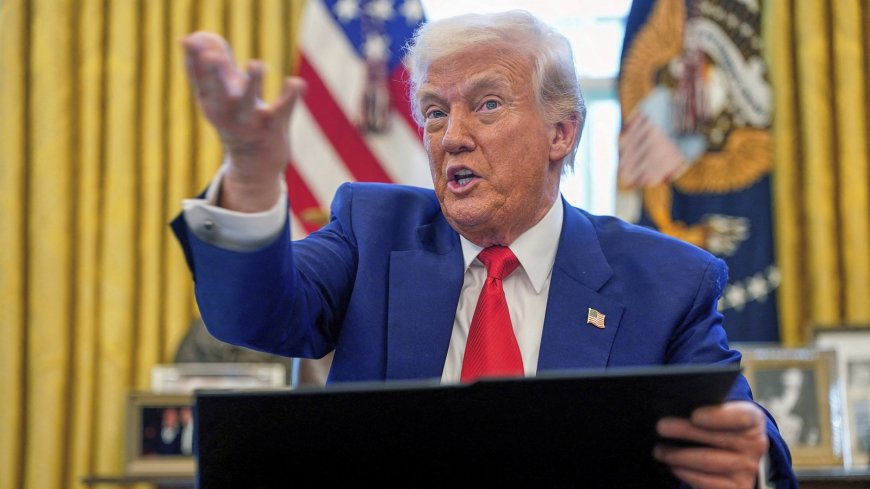
The political context surrounding the threat further amplifies its significance. Congressional Democrats are preparing to challenge the administration’s tariff policies targeting Canadian imports, a development that situates the bridge dispute within a wider domestic contest over the direction of U.S. economic policy. The president’s comments also coincide with heightened friction over Canada’s efforts to diversify trade relationships following tariff increases imposed by Washington. By linking infrastructure approval to broader trade grievances, the administration has effectively elevated the bridge from a transportation asset to a bargaining instrument within a complex negotiation over market access, strategic alignment, and economic sovereignty.
The project’s financial structure adds another layer of tension. Although the bridge is jointly owned by Michigan and Canada, the Canadian government has financed the overwhelming majority of its construction, with plans to recover costs through toll revenues once operations commence. This arrangement was originally presented as a pragmatic solution to expedite development of a crossing widely regarded as essential to both economies. Trump’s intervention reframes that structure as evidence of asymmetry, suggesting that infrastructure cooperation must be evaluated through the same cost-benefit calculus that guides trade negotiations. Such a perspective signals a significant shift in how physical connectivity between nations is conceptualized within contemporary statecraft.
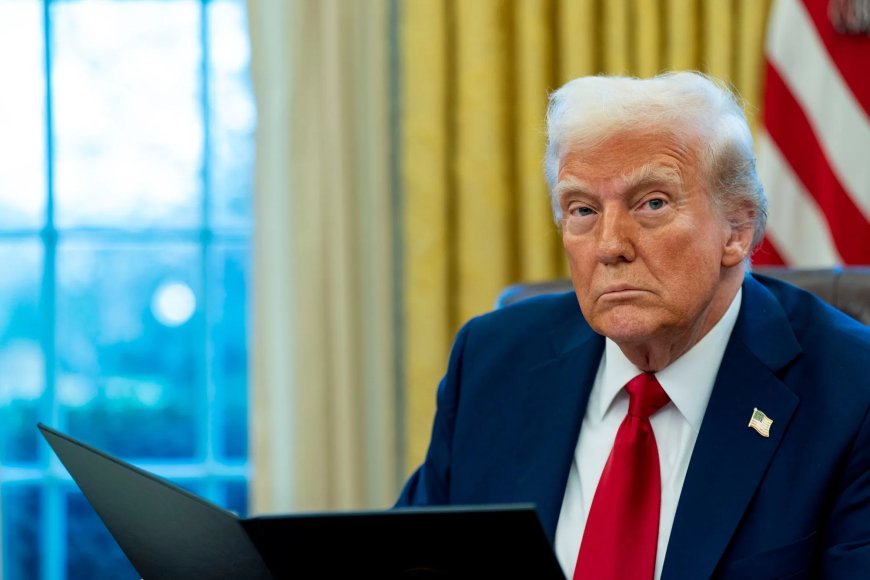
Beyond its economic function, the Gordie Howe International Bridge occupies a symbolic position within U.S.–Canada relations. The two nations share one of the most extensive and integrated economic partnerships in the world, characterized by intertwined supply chains, harmonized regulatory systems, and a shared commitment to cross-border mobility. Infrastructure has historically functioned as both a facilitator and a symbol of this integration. Introducing political uncertainty at the threshold of completion risks altering perceptions of reliability in bilateral agreements, with potential consequences for future cooperative initiatives across sectors ranging from energy to technology.
Trump’s broader critique of Canada’s trade posture reflects growing concern within his administration about shifting global alignments. His warning that closer economic ties between Canada and China could undermine Canadian sovereignty, though delivered in hyperbolic terms, reveals an underlying strategic anxiety about the diffusion of influence in North America. By framing Canada’s diversification of trade relationships as a geopolitical risk, the administration positions economic interdependence itself as a domain of competition rather than mutual benefit. This perspective mirrors a wider transformation in U.S. foreign policy in which trade flows, infrastructure projects, and investment networks are interpreted through the lens of strategic rivalry.
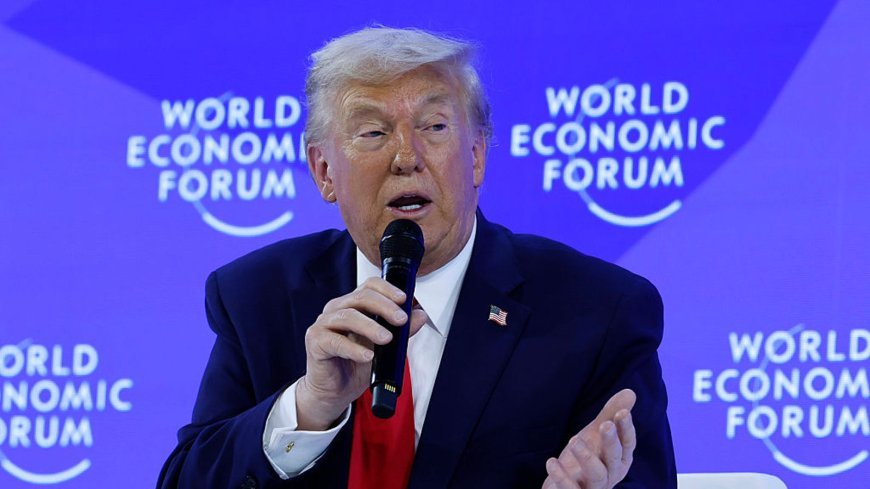
Reactions within the United States have underscored the domestic economic stakes of the dispute. Regional leaders and industry stakeholders warn that delaying or canceling the bridge could disrupt supply chains, increase costs for manufacturers, and undermine employment across sectors dependent on cross-border commerce. The Detroit–Windsor corridor supports a substantial share of North American automotive production, and the bridge’s anticipated capacity expansion was intended to mitigate vulnerabilities exposed by recent global disruptions. The prospect of political intervention at this stage raises concerns not only about immediate economic impact but also about the broader investment climate for large-scale infrastructure projects involving international partners.
Canadian officials have thus far responded cautiously, reflecting both diplomatic restraint and recognition of the project’s importance. Ottawa’s substantial financial commitment underscores its strategic interest in ensuring the bridge’s completion, while the absence of immediate public escalation suggests a preference for managing the dispute through institutional channels. Nevertheless, the episode introduces a new variable into an already complex bilateral relationship, one increasingly shaped by competing visions of economic partnership and national autonomy.
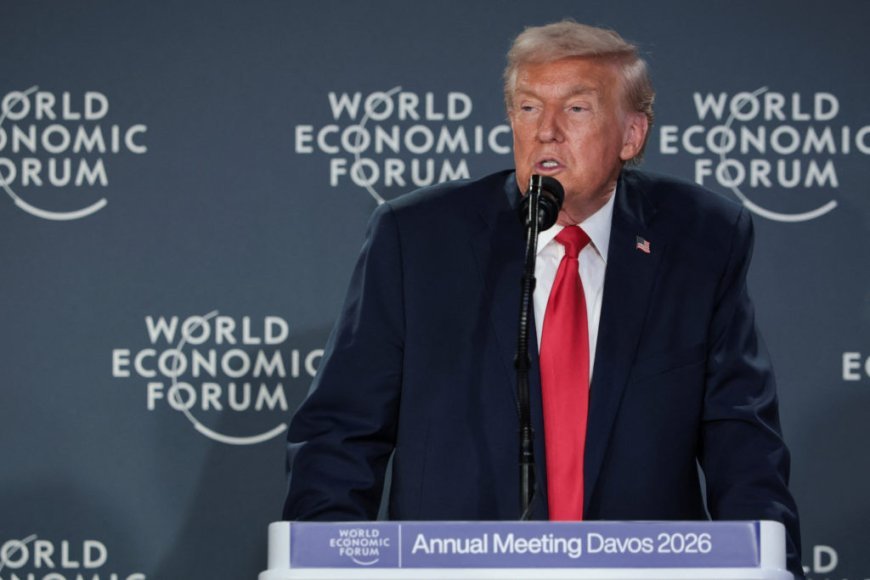
The controversy surrounding the Gordie Howe International Bridge illustrates a broader transformation in the architecture of global economic relations. Infrastructure, once understood primarily as a neutral facilitator of trade, is increasingly deployed as an instrument of geopolitical leverage. By linking the project’s operational future to demands for economic redress, the Trump administration has reinforced a model of diplomacy in which connectivity itself becomes conditional, subject to renegotiation in pursuit of strategic advantage.
As the bridge awaits its anticipated opening, it stands not only as a physical structure spanning a shared border but also as a manifestation of evolving power dynamics within North America. The outcome of the dispute will shape perceptions of bilateral cooperation, influence investment confidence, and signal how far economic nationalism can extend into domains traditionally governed by mutual interest. In an era defined by transactional diplomacy and strategic recalibration, even the infrastructure that connects nations is no longer insulated from the politics that divide them.
Advertisement