
East Wing Thanks Nation For Its Service As Trump Appointees Approve Ballroom Larger Than White House
The East Wing officially makes room as Trump appointees approve a ballroom larger than the White House itself. Supporters call it beautiful. Critics call it immense. Construction continues pending court review.
 Filna
Filna 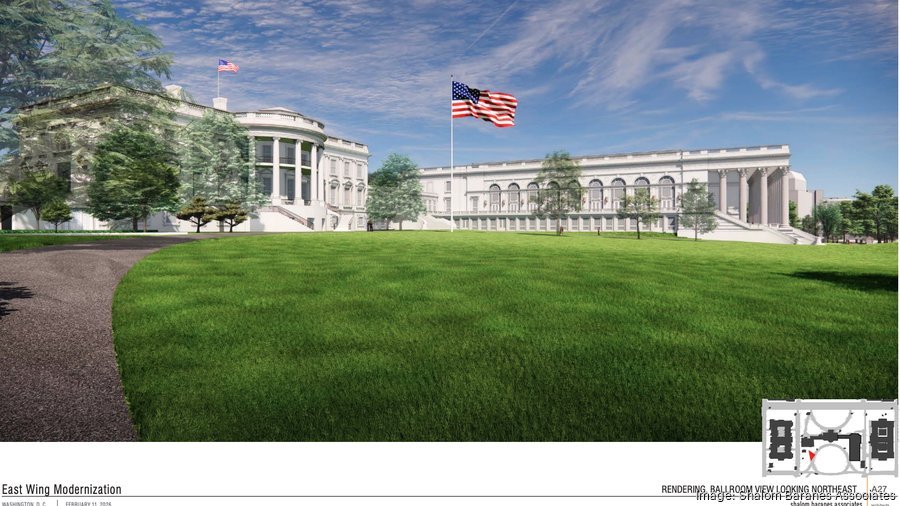
Advertisement
The East Wing has officially been thanked for its decades of service after the U.S. Commission of Fine Arts — composed entirely of President Donald Trump’s recent appointees — approved a proposal to construct a ballroom larger than the White House itself in its place.
Advertisement
Advertisement
Advertisement
Advertisement

The commission had originally convened to review design updates, with a final vote scheduled for next month. Instead, Chairman Rodney Mims Cook Jr. introduced a motion to move directly to final approval. Six of the seven commissioners voted in favor — twice. One commissioner abstained, having previously served as the project’s architect.
“Our sitting president has actually designed a very beautiful structure,” Cook said prior to the vote, adding that the United States “should not be entertaining the world in tents.” The remark echoed Trump’s long-standing frustration with the use of temporary structures on the South Lawn for state dinners and diplomatic events.
According to supporters, the ballroom will eliminate the need for those temporary installations and elevate the White House’s hosting capabilities. Critics have described the design as immense, noting its scale would be roughly twice the size of the current executive mansion.
At a January session, commissioners had raised questions about the size and scope of the project while largely endorsing the overall vision. Some recommended modifications were incorporated into the updated design, which commissioners welcomed this week.
Trump’s October decision to demolish the East Wing sparked public backlash, particularly because construction began without the typical independent reviews, congressional approvals, and extended public comment processes often required for alterations to historic federal buildings.
The National Trust for Historic Preservation has filed a lawsuit seeking to halt the project. A court decision is pending.
The proposal now moves to the National Capital Planning Commission for further discussion in March. That body, led by a senior White House aide, holds jurisdiction over significant construction and renovation efforts in the capital region.
For now, the approval stands.
Temporary tents may soon retire.
The White House footprint expands.
And the East Wing, once a quiet administrative neighbor, has been replaced by what supporters describe as necessary modernization — and what architectural historians may classify as ambitious.
State dinners, officials say, deserve permanence.
Scale, apparently, is part of the décor.
Advertisement