Donald Trump Won’t Blink on Tariffs — Mostly Because Blinking Suggests Doubt
After the Supreme Court blocked his emergency tariff powers, Donald Trump is promising even higher import duties. Democrats prepare countermeasures as economic uncertainty grows.
 Filna
Filna 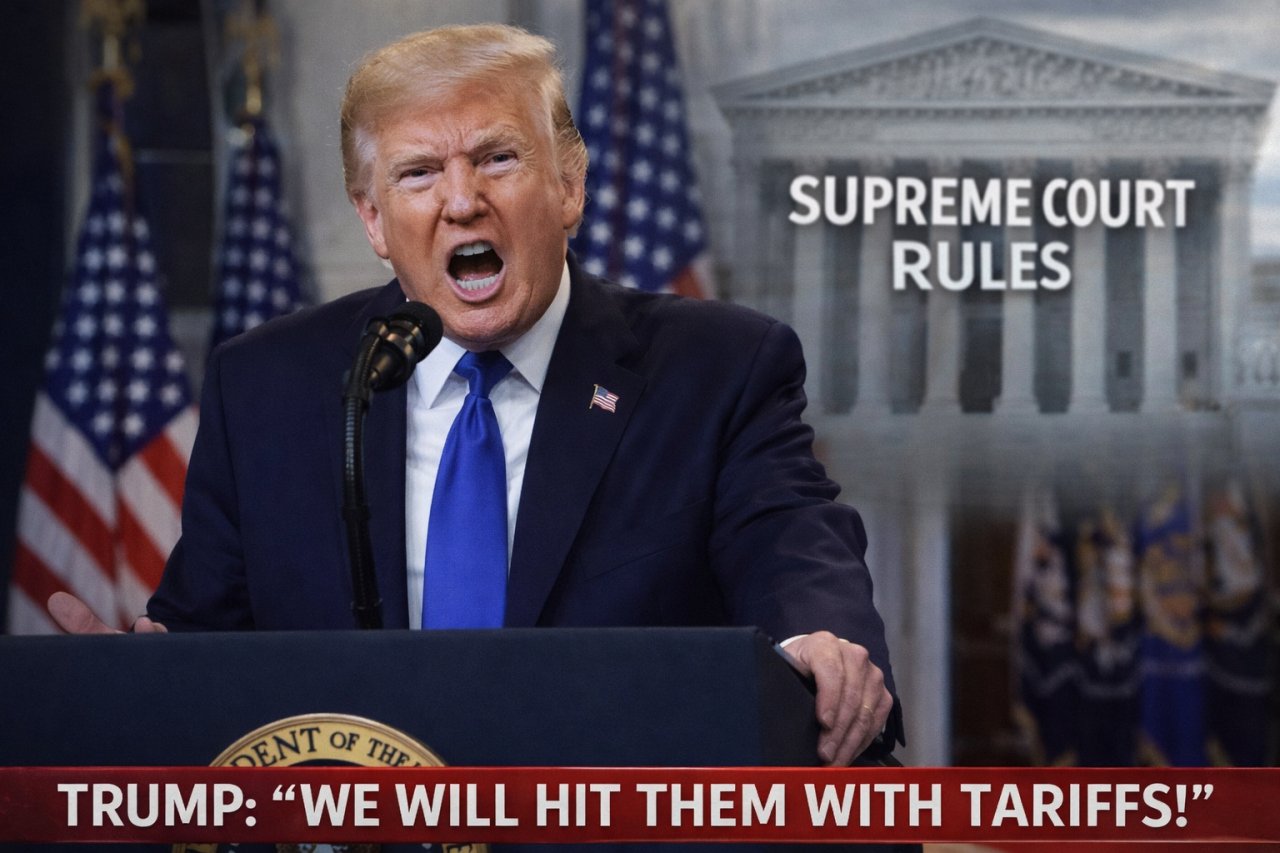
Advertisement
No, Donald Trump is not searching for a new “most beautiful word” to replace tariffs.
Advertisement
Advertisement
Advertisement
Advertisement
He has chosen his word. He has cherished his word. He has attempted to govern by his word.
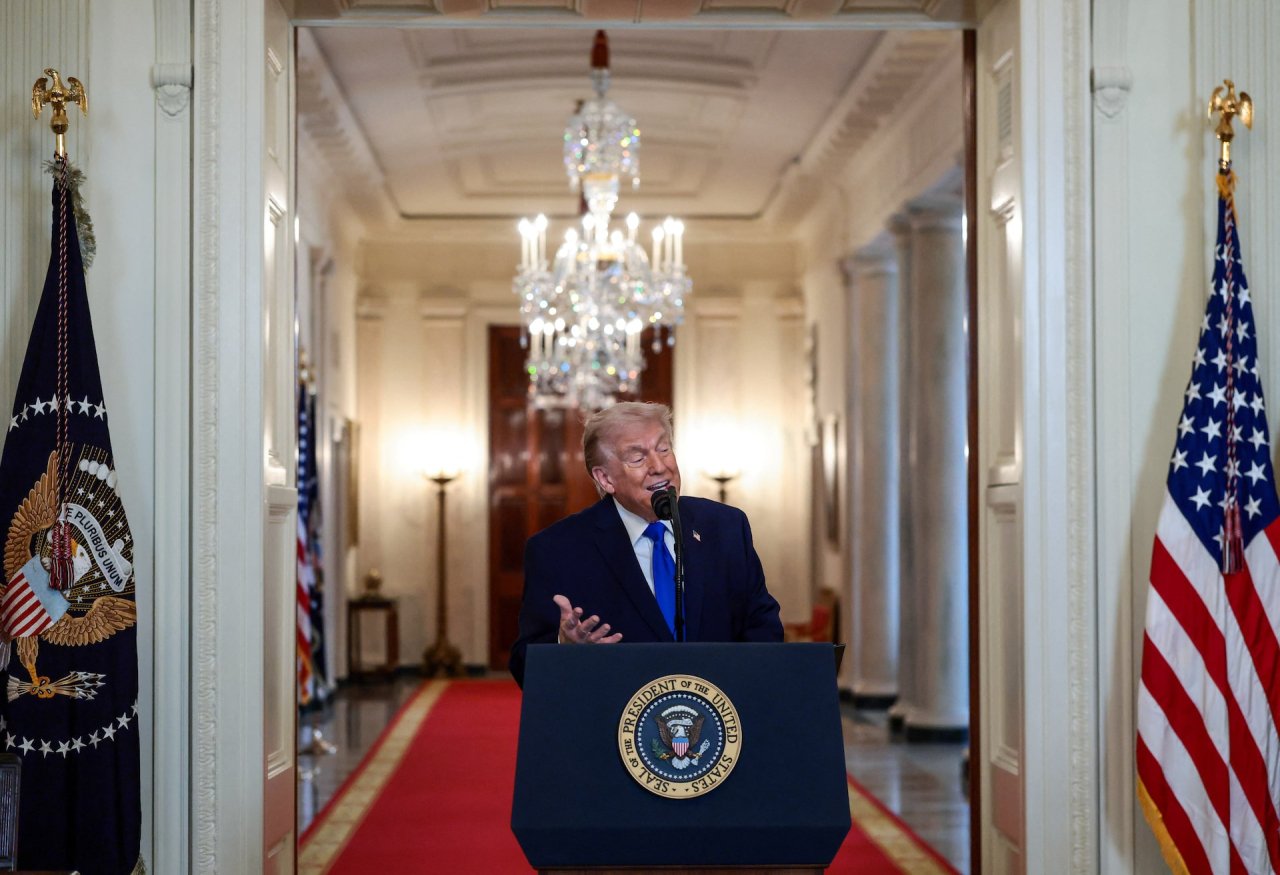
And even after the Supreme Court ruled that he unlawfully used emergency powers under the International Emergency Economic Powers Act (IEEPA) to impose sweeping tariffs, the president has responded with what can best be described as intensified affection.
Ahead of his State of the Union address, Trump is vowing not only to maintain tariffs — but to raise them.
Because when the Court says “no,” the correct response, apparently, is “watch this.”
The Court Said No. The Word Remains Beautiful.
The Supreme Court’s 6–3 decision blocked Trump’s use of IEEPA as a blanket trade-war mechanism.
Treasury Secretary Scott Bessent acknowledged the ruling plainly:
“The president cannot use the IEEPA… to do this.”
But, he added, “The president does have other authorities.”
Translation: different legal lever, same enthusiasm.
Bessent described the next move as a five-month “bridge” using alternative statutes while the administration builds toward a more permanent tariff regime.
Bridge construction is now bipartisan. So is economic uncertainty.
Why Trump Can’t Quit Tariffs
There are two primary reasons.
First: Trump believes in tariffs with near-theological conviction.
He has long viewed them as tools of industrial revival and national leverage, dismissing arguments that they function as taxes on consumers. Despite trade deficit data showing little improvement and manufacturing jobs declining, Trump maintains that tariffs are working.
“I have very effectively utilized tariffs,” he said Friday.
Evidence is optional. Faith is durable.
Second: Tariffs are not merely economic policy — they are executive leverage.
When asked why he didn’t work with Congress to pass new tariffs, Trump responded:
“I don’t have to. I have the right to do tariffs.”
The subtext was louder than the sentence.
The Political Risk Meter
Many Republicans, facing midterm elections, would prefer moderation. Democrats, meanwhile, are preparing legislation aimed at forcing the administration to compensate consumers for tariff-driven price increases.
Sen. Andy Kim indicated such measures are already in motion.
The political battlefield is forming:
• Republicans: recalculating.
• Democrats: sharpening messaging.
• Voters: monitoring grocery receipts.
The Global Thermostat Theory
Trump has used tariffs expansively — not only as trade policy, but as geopolitical punctuation.
Brazil faced a 50% tariff amid political tensions involving former President Jair Bolsonaro. Switzerland reportedly felt tariff pressure after diplomatic disagreements. If a leader displeased him, their exports felt it.
Tariffs became less about supply chains — more about temperature control.
However, alternative legal authorities come with stricter limits and compliance requirements. The new tools may not allow the same improvisational approach.
The personal thermostat could face regulatory adjustments.
The Bigger Picture
Trump views constraints on tariff power as weakening America against global rivals. He has framed the Supreme Court’s ruling as beneficial to foreign countries “dancing in the streets.”
The administration’s next move will shape not only trade policy — but also the balance of executive authority.
Defiance: confirmed.
Alternative statutes: activated.
Midterm risk: rising.
Affordability concerns: persistent.
Tariffs remain, in Trump’s worldview, the instrument of strength.
Blinking implies reconsideration.
And reconsideration, in this chapter, is not scheduled.
Advertisement