
Oslo Accords Architect Under Scrutiny as Epstein Links Raise New Questions About Diplomatic Integrity
Revelations tying a central Oslo Accords mediator to Jeffrey Epstein’s network are reigniting debate over diplomacy, influence, and vulnerability within elite peace processes.
 Ronald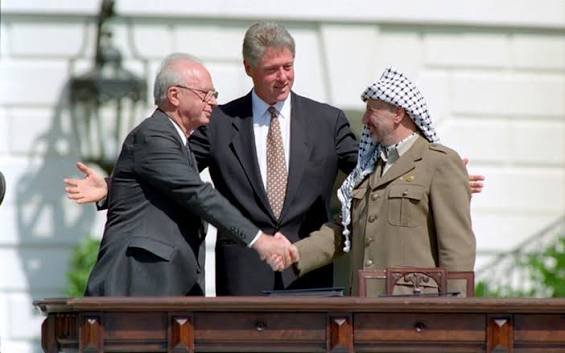
Advertisement
The architecture of modern diplomacy depends on a foundational premise: that intermediaries operate with independence, credibility, and insulation from coercion. That premise is now under renewed scrutiny following disclosures linking a central figure in the Middle East peace process to the financial and social network of Jeffrey Epstein. The revelations have ignited debate not only about individual conduct but about structural vulnerabilities within elite diplomatic systems where access, influence, and discretion frequently intersect.
Advertisement
Advertisement
Advertisement
Advertisement

At the center of the controversy stands Terje Rod-Larsen, a Norwegian diplomat widely credited as a key architect of the 1993 Oslo Accords, the framework that reshaped international engagement with the Israeli–Palestinian conflict and established the diplomatic scaffolding for the two-state solution. Newly surfaced documents from the U.S. Department of Justice and reporting by NRK and Dagens Næringsliv describe a relationship between Rod-Larsen and Epstein that extended beyond casual association into operational collaboration.

According to investigative findings, Rod-Larsen is alleged to have facilitated visas connected to women later identified as victims within Epstein’s trafficking network and to have benefited from financial arrangements tied to Epstein’s estate. The documents also indicate a beneficiary clause naming Rod-Larsen in connection with a multimillion-dollar payout. While the full legal context of these arrangements remains under examination, the disclosures have produced a reputational shockwave across diplomatic institutions long invested in the legitimacy of the Oslo framework.
The implications of these revelations are magnified by Rod-Larsen’s institutional role during the period in question. As president of the International Peace Institute, he occupied a position designed to bridge policy expertise, diplomatic engagement, and elite funding networks. Investigative reporting suggests that this institutional platform was used to facilitate interactions beneficial to Epstein’s broader network of influence, including efforts to cultivate reputational legitimacy through association with international policy circles.

The fallout has extended beyond Rod-Larsen personally. His wife, Mona Juul, herself a prominent participant in the Oslo negotiations and a senior Norwegian diplomat, resigned from her ambassadorial post following the emergence of the allegations, and her security clearance was revoked. The development underscores how reputational risk within elite diplomatic circles can propagate across institutional boundaries, affecting not only individuals but the credibility of entire policy frameworks.
For Palestinian political actors and analysts, the disclosures have reopened longstanding concerns about the structural asymmetries embedded within the Oslo process. The accords were heralded internationally as a diplomatic breakthrough, yet critics have long argued that the framework entrenched power imbalances rather than resolving them. The suggestion that a principal mediator may have been vulnerable to external leverage introduces a new dimension to those critiques, raising questions about whether influence, rather than neutrality, shaped key moments in the negotiation process.

Such concerns reflect broader tensions within international diplomacy, where the concentration of authority among a relatively small network of intermediaries can create conditions ripe for informal influence. High-level negotiations frequently rely on personal trust, confidential channels, and elite social access. These same characteristics, while operationally efficient, can also reduce transparency and increase susceptibility to reputational or financial pressure.
The controversy surrounding Rod-Larsen thus transcends the particulars of any single allegation. It highlights the structural interplay between private wealth and public authority that defines much of contemporary global governance. Figures capable of moving fluidly between philanthropic networks, policy institutions, and political leadership often operate within environments where oversight is limited and accountability is diffuse.
The Oslo Accords themselves remain a defining reference point in Middle East diplomacy, symbolizing both the promise and fragility of negotiated peace. Their endurance as a diplomatic framework has long depended on the perception that they were brokered through credible mediation. The emergence of evidence suggesting that one of their principal architects maintained deep ties to a figure synonymous with elite impunity threatens to erode that perception.

Equally significant is the broader institutional response. Diplomatic establishments traditionally prioritize continuity and stability, often treating reputational crises as contained incidents rather than systemic signals. Yet the Rod-Larsen revelations intersect with a wider pattern of disclosures illustrating how elite networks can blur boundaries between public service and private influence.
The controversy arrives at a moment when the legitimacy of international mediation is already under strain. Regional political dynamics have shifted dramatically since the 1990s, and skepticism toward externally brokered solutions has intensified across constituencies directly affected by conflict. In this context, questions about the personal integrity of key mediators carry implications far beyond historical reassessment; they shape contemporary perceptions of whether diplomacy operates as an instrument of peace or an extension of power.
Ultimately, the emerging record underscores a recurring paradox in global governance. The individuals entrusted with resolving conflicts often derive their effectiveness from proximity to wealth and influence, yet that proximity can itself become a source of vulnerability. When access functions simultaneously as credential and liability, the boundary between mediation and manipulation becomes increasingly difficult to define.

The scrutiny now facing Rod-Larsen does not rewrite the historical significance of the Oslo Accords, but it does compel a re-examination of the conditions under which they were negotiated. More broadly, it raises a fundamental question about modern diplomacy: whether systems built on elite trust can sustain legitimacy in an era defined by demands for transparency and accountability.
Advertisement