United Nations Asked To ‘Get On The Ball’ As Trump Assembles Board Of Peace To Do It Better
The United Nations finds itself gently sidelined as Trump convenes the first meeting of his Board of Peace, pledging $5 billion for Gaza reconstruction and a new stabilization force. Some allies attend. Others observe.
 Filna
Filna 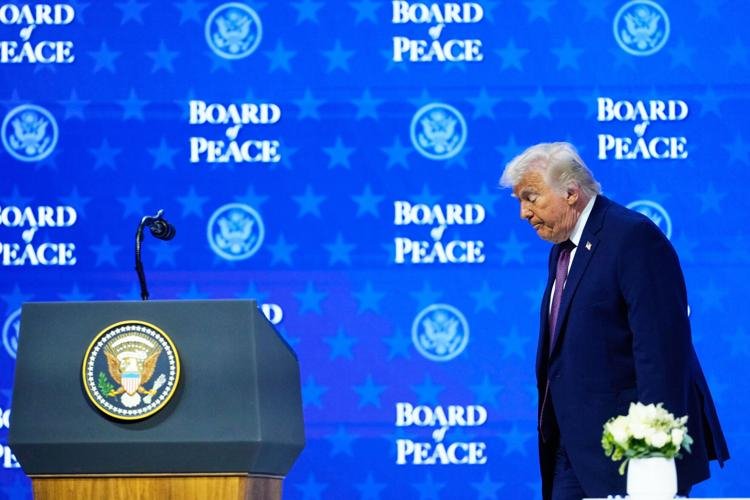
Advertisement
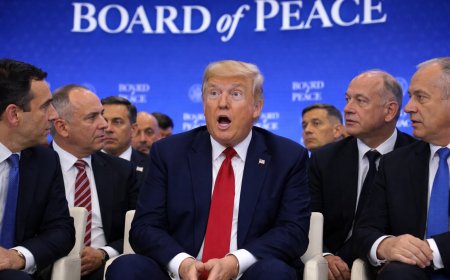
The United Nations has been advised to “get on the ball” as President Donald Trump convenes the inaugural meeting of his Board of Peace — a gathering of more than two dozen member countries and several cautious observers to discuss reconstruction and stabilization in Gaza.
Advertisement
Advertisement
Advertisement
Advertisement
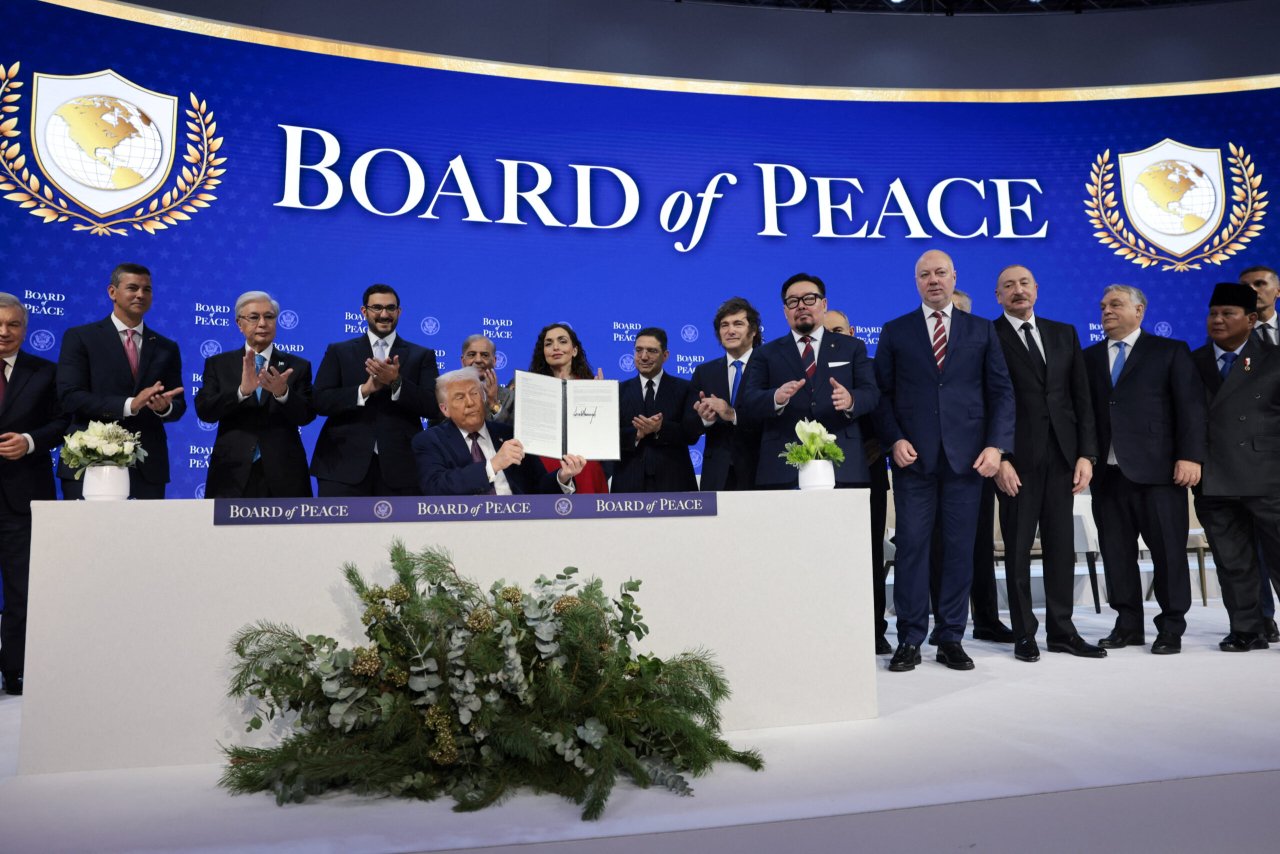
The board, initially conceived as part of Trump’s 20-point peace plan, now carries broader ambitions. What began as a framework for addressing Gaza’s postwar recovery has expanded into a body the president believes could help resolve conflicts worldwide. Thursday’s meeting will focus on rebuilding Gaza and establishing an international stabilization force to support the territory’s fragile ceasefire.
Trump announced that board members have pledged $5 billion toward reconstruction — a notable contribution, though modest against the estimated $70 billion needed to fully rebuild. Members are also expected to commit thousands of personnel to stabilization and policing efforts.
“We have the greatest leaders in the world joining the Board of Peace,” Trump said earlier this week, describing it as potentially the most consequential board ever assembled.
Not everyone shares that enthusiasm.
More than 40 countries and the European Union will send representatives, according to administration officials. Germany, Italy, Norway and Switzerland have opted not to formally join but will attend as observers. The Vatican has suggested that the United Nations should remain the primary manager of global crises. The White House has responded by emphasizing the board’s legitimacy and ambition.
Meanwhile, the UN Security Council held its own high-level session on Gaza and West Bank tensions — originally scheduled for the same day as Trump’s meeting before being moved to accommodate diplomatic travel logistics. The choreography was subtle.
Central to Thursday’s discussions is the creation of an armed international stabilization force tasked with maintaining order and ensuring the disarmament of Hamas — a cornerstone demand within the ceasefire framework. Indonesia has offered a firm commitment to participate. Others have expressed interest while acknowledging challenges.
Hamas has provided limited assurances regarding demilitarization. US officials have indicated they are aware of the obstacles but encouraged by ongoing mediation efforts.
Speakers at the meeting are expected to include Secretary of State Marco Rubio, special envoy Steve Witkoff, Jared Kushner, former UK Prime Minister Tony Blair, and others involved in shaping the board’s operational strategy.
Skeptics argue that without a clearly defined mandate beyond Gaza, the board’s expansion could overlap with existing international institutions. Supporters counter that previous approaches were insufficient and that unconventional methods may yield unconventional results.
So the scene unfolds as follows:
A $5 billion pledge.
A $70 billion rebuilding estimate.
A fragile ceasefire.
A stabilization force still assembling.
The United Nations continues convening.
The Board of Peace begins operating.
One emphasizes precedent.
The other promises momentum.
Global diplomacy, for now, has two conference rooms.
Peace remains on the agenda.
Implementation is reviewing its schedule.
Advertisement