
America’s $38.3 Billion Detention Boom: When Warehouses Become Policy
Documents reveal a $38.3bn plan to convert U.S. warehouses into detention centers, signaling a long-term expansion of federal immigration enforcement infrastructure.
 Ronald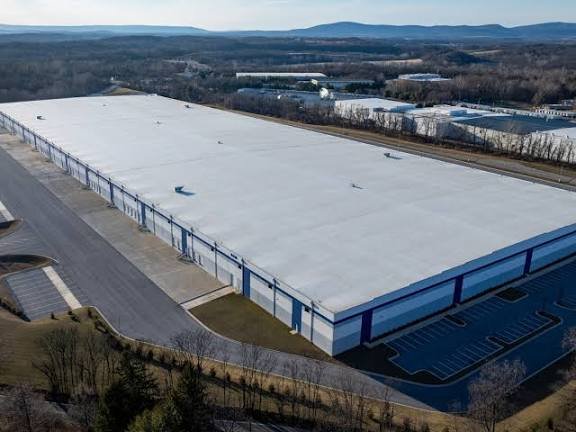
Advertisement
The United States government is preparing to spend $38.3 billion transforming ordinary warehouses into immigration detention centers, a proposal that reads less like administrative planning and more like a blunt declaration of governing philosophy. According to planning documents tied to operational projections from U.S. Immigration and Customs Enforcement and budget estimates associated with U.S. Citizenship and Immigration Services, federal authorities are not merely expanding detention capacity. They are industrializing it. The plan’s scale suggests an unmistakable message: immigration enforcement is no longer a policy challenge to be managed but a permanent system to be built, financed, and normalized through infrastructure that will outlast political cycles.
Advertisement
Advertisement
Advertisement
Advertisement
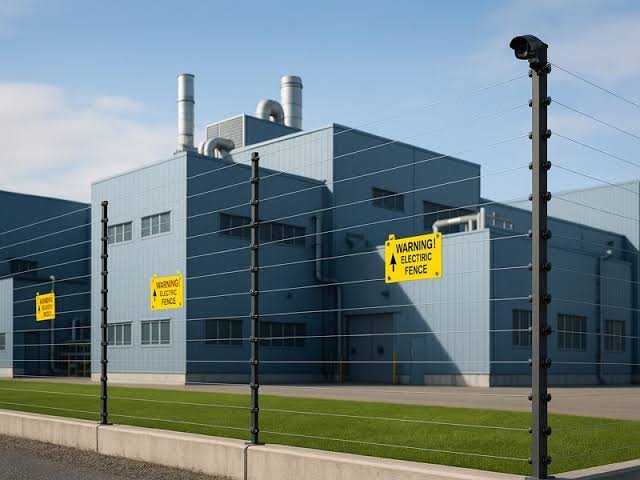
The documents reveal a coordinated national strategy to acquire warehouse properties and retrofit them into a tiered detention network capable of housing tens of thousands of individuals. In Merrimack, a single proposed facility carries an estimated $158 million price tag for conversion alone, followed by nearly as much in operating costs over three years. That figure does not represent an anomaly; it is the template. Across the country, industrial real estate is being reimagined not as a byproduct of economic development but as a modular foundation for enforcement capacity. In effect, the architecture of globalization is being repurposed to contain the people globalization itself displaced.
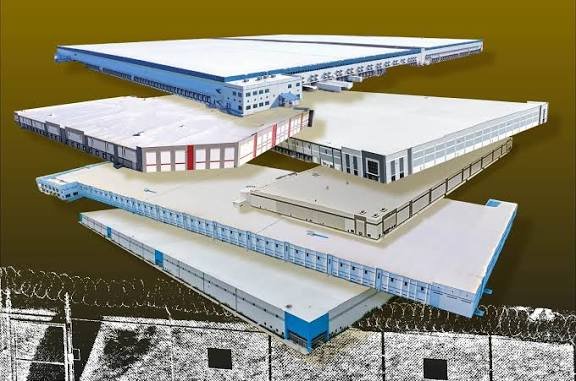
The operational design is methodical in its simplicity and staggering in its implications. Sixteen regional intake facilities would function as short-term processing hubs, holding between 1,000 and 1,500 detainees each. From there, individuals would be transferred into eight large-scale regional centers designed to hold up to 10,000 people at a time for extended periods pending deportation. The system resembles a logistical pipeline rather than a legal process, a conveyor belt of custody calibrated for throughput. Efficiency, not ambiguity, is the governing principle. The infrastructure is engineered to ensure that enforcement does not depend on political weather but on physical capacity that can operate regardless of rhetoric.
This approach represents a shift from reactive enforcement to preemptive permanence. Governments historically expand detention space when confronted with immediate pressure. The warehouse conversion model inverts that logic. Instead of responding to events, the state builds the capacity first and allows the system’s existence to shape future policy. Infrastructure becomes argument. Once billions are committed to physical facilities, enforcement priorities acquire a gravitational pull that policy debate struggles to escape. Buildings, unlike legislation, do not expire quietly.
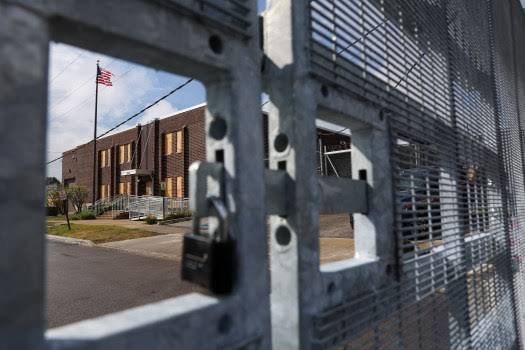
Supporters of the plan frame it as pragmatic modernization, an administrative necessity driven by staffing increases and anticipated enforcement demands. That explanation is technically accurate and strategically incomplete. Capacity does not merely accommodate enforcement; it incentivizes it. Bureaucracies designed for scale rarely operate below it. The expansion therefore functions less as preparation for future policy than as its quiet author. A detention system built for tens of thousands will not exist idly, waiting for justification. It will generate its own.
The political timing of the proposal is equally revealing. With budget disputes threatening operational continuity within the Department of Homeland Security, infrastructure investment operates as a form of institutional insurance. Facilities financed today constrain policy tomorrow. Funding battles may stall programs, but concrete, steel, and security perimeters are more difficult to unwind. The state, in other words, is building enforcement capacity that fiscal volatility cannot easily dismantle.
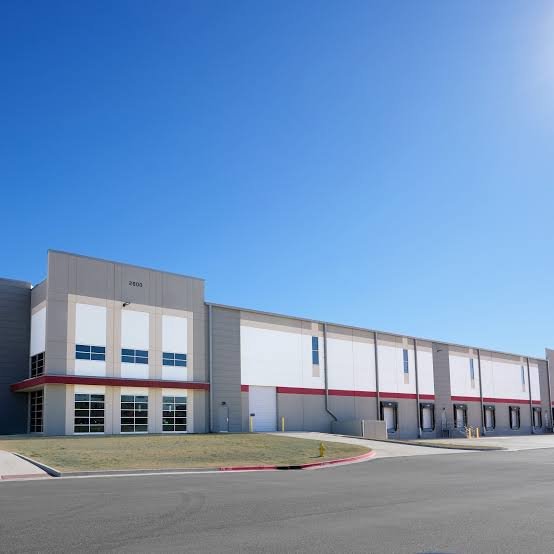
There is also a cultural dimension embedded within the plan’s physicality. Warehouses occupy a symbolic place in the modern economy as spaces of storage, sorting, and distribution. Their transformation into detention facilities collapses the distinction between logistical management and human governance. People become inventory within a system optimized for movement control. The metaphor is uncomfortable precisely because it is operationally apt. The design treats migration less as a social phenomenon than as a processing problem.
The expansion further reshapes the geography of enforcement. By dispersing facilities throughout the national interior, the system embeds immigration control into domestic administrative space rather than confining it to border regions. Detention becomes a routine presence within the everyday landscape of federal governance. Communities are not merely observers of policy; they become its hosts. Economic incentives, employment opportunities, and political tensions follow accordingly, binding local interests to federal enforcement priorities whether they welcome the relationship or not.
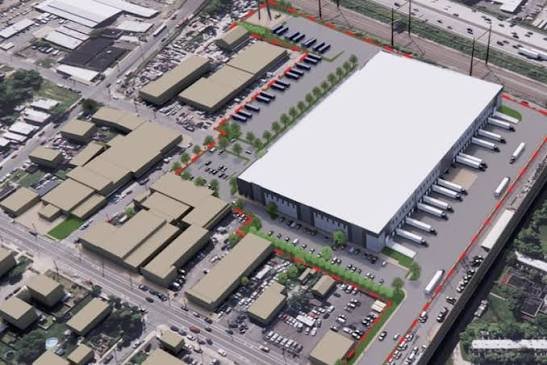
The disclosure of the proposal, first reported by The Washington Post, has intensified debate not because detention expansion is new, but because its scale is unusually candid. Governments often speak in the language of temporary necessity. This plan speaks in the language of permanence. It does not imply an emergency response; it describes an enduring system. The distinction matters. Temporary measures can be reconsidered. Infrastructure invites normalization.
Perhaps the most striking feature of the proposal is its clarity. There is no pretense of ambiguity in a strategy that allocates tens of billions of dollars to physical detention capacity. Policy objectives are not being obscured; they are being constructed. The state is not improvising enforcement mechanisms. It is standardizing them, scaling them, and embedding them into the physical environment in ways that ensure durability.
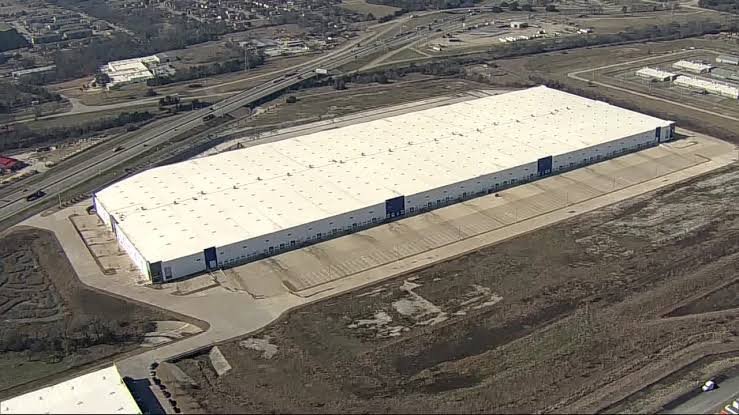
What emerges from the documents is not merely a funding initiative but a governing worldview. Migration is framed as a phenomenon to be managed through containment, and containment is framed as a function of capacity. The resulting logic is brutally straightforward: if enforcement requires space, build more space; if policy requires permanence, construct permanence. In this framework, infrastructure is not an accessory to governance. It is governance.
The warehouse conversion strategy therefore marks more than an administrative development. It signals the consolidation of an enforcement paradigm in which physical systems, rather than legislative compromises, define the limits of policy. The question is no longer whether detention will expand, but how fully it will be integrated into the architecture of federal power. Once policy is poured into concrete, it ceases to be provisional. It becomes structural.
Advertisement