Trump, Epstein, and the Archive of Power: What 3 Million Files Reveal About Proximity, Denial, and Political Risk
Analysis of newly released Epstein files detailing Donald Trump references, unverified allegations, and the political implications of proximity to power networks.
 Ronald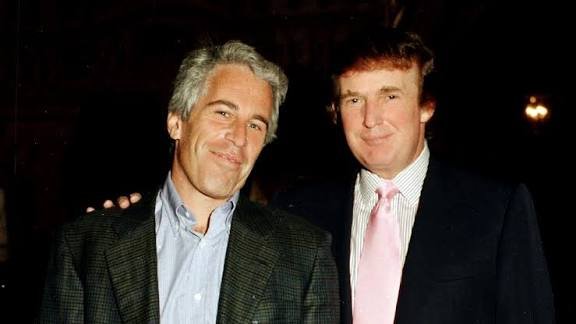
Advertisement
The release of millions of federal records connected to Jeffrey Epstein has not delivered a singular revelation so much as it has exposed a pattern—one that illuminates the mechanics of proximity, influence, and narrative control in modern American power structures. At the center of that pattern sits Donald Trump, whose name appears repeatedly across the sprawling archive in ways that are politically consequential even where legally inconclusive.
Advertisement
Advertisement
Advertisement
Advertisement

The significance of the document release lies less in any single allegation and more in what the scale and structure of the material reveal about elite social ecosystems. References to Trump number in the thousands across a record set that spans personal correspondence, investigative notes, third-party claims, and contextual mentions embedded within media clippings circulated among Epstein’s network. Such breadth does not function as proof of wrongdoing, and federal authorities have emphasized that many claims contained in the files remain unverified. Yet the volume of intersection between political leadership and a convicted sex offender’s social universe invites scrutiny not simply of individual conduct, but of how influence operates within overlapping spheres of wealth, politics, and reputation management.
Among the most consequential disclosures is the existence of a compiled list of allegations gathered by federal investigators from tips and secondary reports. These materials include claims that were neither substantiated nor formally pursued, and the Justice Department has stated that allegations against Trump contained in the files are false. Trump himself has categorically denied wrongdoing. However, the presence of such allegations within federal investigative workflows underscores the institutional reality that proximity to scandal generates its own bureaucratic afterlife. Once a name enters the architecture of investigation—through testimony, correspondence, or association—it becomes part of a permanent evidentiary ecosystem, irrespective of legal outcome.

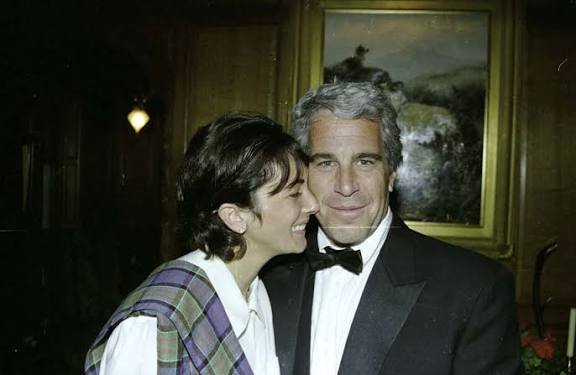
The files also include references to Epstein’s longtime associate Ghislaine Maxwell, whose role as a facilitator of social introductions within elite circles has long been understood as central to the structure of Epstein’s network. In investigative notes, one victim described being introduced to Trump at a social event by Maxwell. The account states that no interaction followed beyond the introduction. Such details illustrate a recurring theme within the archive: social adjacency rather than direct participation. Yet adjacency itself carries political weight when it intersects with public office, because the optics of association shape trust long before courts weigh evidence.
The Justice Department’s release process, overseen by Todd Blanche, has emphasized procedural independence from White House influence. Officials insist that the review process was conducted without executive direction regarding redactions or interpretive framing. This assertion, while institutionally routine, reflects a deeper political sensitivity surrounding the disclosure. The struggle over the timing and scope of the release became a contest over narrative authority—who controls the story of elite misconduct, and when that story becomes public.
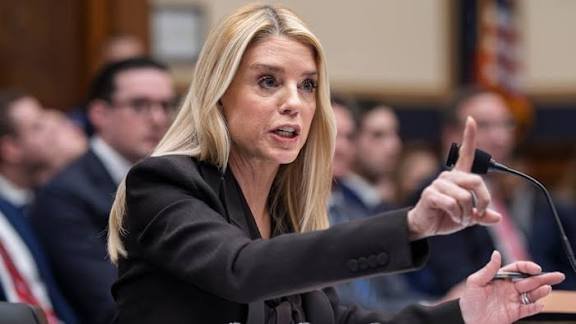
Congressional intervention ultimately forced disclosure after mounting bipartisan pressure, a dynamic that itself reveals the evolving function of scandal in contemporary governance. Once primarily a tool of partisan competition, scandal has increasingly become a structural mechanism through which legitimacy is negotiated. Lawmakers across party lines recognized that withholding records risked amplifying suspicion, while release offered at least the appearance of transparency, even if interpretive battles would follow.
The scale of the archive further complicates public understanding. With millions of documents uploaded simultaneously, interpretation becomes diffuse, allowing competing political narratives to emerge from the same evidentiary landscape. For critics, the frequency of Trump references signals a troubling level of social integration within Epstein’s orbit. For defenders, the absence of verified misconduct reinforces longstanding claims that political adversaries weaponize association. Both interpretations coexist because the archive functions less as a definitive account than as a contested terrain of meaning.

The broader implications extend beyond any individual figure. The Epstein files illuminate how elite networks operate through overlapping circuits of finance, philanthropy, and social capital. Political leaders, business executives, and cultural influencers intersect within environments where reputation is currency and access is power. When such networks collapse under criminal investigation, the resulting documentation reveals not only personal relationships but structural patterns of influence that transcend ideology.
In this context, Trump’s documented presence within Epstein’s social sphere becomes a case study in reputational risk within hyper-connected power systems. Modern political authority depends not merely on policy positions but on the management of association. The archive demonstrates how proximity—even absent evidence of wrongdoing—can generate enduring political vulnerability. It also illustrates how denial, deflection, and narrative reframing become strategic tools in navigating that vulnerability.
The release has also revived scrutiny of broader investigative conclusions about Epstein’s operations. Federal authorities previously stated that no comprehensive list of powerful clients had been substantiated. Yet the continuing emergence of names within investigative records fuels public perception that the full scope of elite involvement remains unresolved. This tension between institutional conclusion and public suspicion reflects a widening trust deficit in democratic governance, where transparency is demanded yet rarely perceived as sufficient.

Another dimension of the disclosure concerns memory and documentation as instruments of power. Epstein’s own communications reveal an individual acutely aware of media dynamics and political perception. His circulation of news articles and commentary about prominent figures demonstrates how information itself functions as leverage within elite circles. The archive thus portrays influence not merely as social connection but as informational asymmetry—the ability to know, archive, and potentially deploy knowledge about others.
The political consequences of the document release will unfold less through legal proceedings than through narrative accumulation. Each reference, denial, and clarification becomes part of a broader interpretive framework through which voters assess credibility. In an era defined by information saturation, perception often emerges not from decisive evidence but from patterns that feel suggestive even when inconclusive.

Ultimately, the significance of the Epstein files lies in their illumination of systemic vulnerability within structures of power. They expose how elite networks blur the boundaries between private association and public accountability. They demonstrate how investigative processes intersect with political survival. And they reveal that in contemporary governance, proximity itself can become a form of risk—one that persists long after courts, investigators, and administrations attempt to close the record.
What the archive offers is not resolution but exposure: a portrait of how influence circulates, how denial operates, and how political authority navigates scandal in an age where documentation is both weapon and witness.
Advertisement