Trump Signals Tactical Shift on Immigration Enforcement Amid Federal Drawdown in Minnesota
A federal drawdown in Minnesota and Trump’s remarks on a “softer touch” signal tactical recalibration in immigration enforcement amid mounting political pressure.
 Ronald
Advertisement
The Trump administration’s decision to reduce the number of federal immigration enforcement personnel deployed in Minnesota, coupled with President Donald Trump’s public suggestion that enforcement might adopt “a little bit of a softer touch,” reflects a tactical recalibration within a policy framework that has otherwise emphasized aggressive operational posture. The move, which involves the withdrawal of approximately 700 federal officers while leaving a significant enforcement presence in place, illustrates the administration’s attempt to balance political pressure, operational sustainability, and strategic messaging in a state that has become a focal point of national immigration debate.
Advertisement
Advertisement
Advertisement
Advertisement

According to statements from White House border policy leadership, the reduction in federal personnel follows negotiations between federal authorities and local detention facilities regarding coordination with immigration enforcement operations. Although the precise contours of those negotiations remain unclear, the development underscores a recurring structural feature of American immigration governance: enforcement capacity is inseparable from the willingness of local institutions to participate in federal initiatives. The interplay between national authority and local compliance has long defined the practical limits of immigration enforcement, shaping not only operational outcomes but also the political narratives that surround them.

President Trump’s remarks acknowledging the potential need for a “softer touch” introduce a nuanced dimension to an enforcement strategy that has frequently been framed in uncompromising terms. While reaffirming the administration’s characterization of targeted individuals as serious offenders, the president’s language suggests recognition of the political costs associated with highly visible enforcement campaigns. The adjustment appears less a departure from underlying policy objectives than an effort to recalibrate their presentation and implementation in response to sustained public reaction.

The Minnesota operation itself has functioned as a testing ground for broader questions about the scope of federal authority within domestic law enforcement. The deployment of large numbers of federal agents in a single state, far exceeding historical norms, transformed immigration enforcement from a background administrative process into a highly visible exercise of state power. Such visibility has consequences that extend beyond operational metrics, shaping public perception of governance and influencing the political environment in which policy decisions are evaluated.
The administration’s assertion that the drawdown is contingent upon the release of detainees by local authorities further highlights the transactional dynamics that characterize contemporary immigration policy. Enforcement actions are not solely determined by statutory mandates but are mediated through negotiations with state and local actors whose cooperation is essential for implementation. This layered governance structure complicates the narrative of unilateral federal control, revealing instead a system in which authority is both asserted and contested across institutional boundaries.

Political responses from Minnesota’s leadership illustrate the interpretive divide that now surrounds federal immigration policy. State officials have framed the drawdown not as a substantive policy shift but as evidence of political recalculation within the administration. Such interpretations reflect a broader pattern in which enforcement actions are read simultaneously as instruments of governance and as signals within a national political contest. The tension between these interpretations underscores the extent to which immigration enforcement has evolved into a domain where operational decisions carry immediate electoral and ideological implications.
The administration’s approach must also be understood within the context of its broader immigration agenda, which has emphasized deterrence, expedited removal procedures, and the expansion of federal enforcement capacity. A partial drawdown in one state does not signal a reversal of these priorities but rather suggests an adaptive strategy responsive to changing political and institutional conditions. In this sense, the adjustment reflects the practical constraints that shape policy execution even when overarching objectives remain consistent.
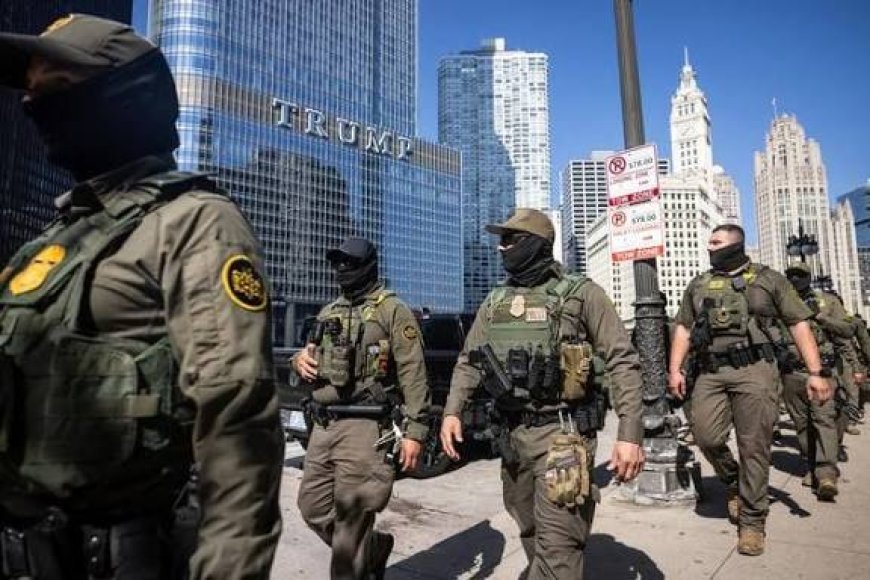
At the institutional level, the episode reveals the challenges inherent in sustaining large-scale enforcement operations over extended periods. The deployment of thousands of federal personnel to a single jurisdiction imposes logistical, financial, and administrative demands that can strain agency resources. A reduction in personnel may therefore represent not only a political gesture but also an operational recalibration aimed at preserving capacity for future initiatives. The interplay between resource management and policy ambition remains a defining feature of contemporary governance across multiple domains.
The broader implications of the Minnesota drawdown extend into debates about federalism and the distribution of authority within the American political system. Immigration enforcement occupies a uniquely contested space between national sovereignty and local autonomy, with federal initiatives often encountering resistance from state and municipal governments that view such operations as disruptive to community relations or local governance priorities. The negotiation of enforcement parameters in Minnesota exemplifies this ongoing structural tension, illustrating how policy outcomes emerge from continuous negotiation rather than unilateral directive.
Economically and socially, the visibility of large-scale enforcement campaigns can influence labor markets, community trust in public institutions, and patterns of civic engagement. The presence of federal agents in significant numbers alters the daily environment in which residents interact with government authority, shaping perceptions of legitimacy and fairness that extend beyond immigration policy itself. The decision to reduce that presence, even partially, therefore carries symbolic as well as operational significance.

The administration’s messaging surrounding the drawdown reveals a strategic effort to maintain rhetorical firmness while introducing tactical flexibility. By framing the adjustment as conditional and temporary, officials preserve the narrative of enforcement resolve while acknowledging the practical realities of governance in a politically contested environment. This dual messaging reflects a broader pattern in which policy recalibration is presented not as concession but as strategic refinement.
Ultimately, the federal drawdown in Minnesota and the president’s comments on enforcement tone represent a moment of adaptation within an immigration agenda defined by assertive state power. The episode illustrates how policy execution evolves in response to institutional constraints, political pressures, and public reaction without necessarily altering underlying strategic objectives. In doing so, it offers a revealing glimpse into the mechanics of governance in an era where domestic policy operates simultaneously as administrative practice and political signal.
As immigration continues to occupy a central place in national political discourse, developments in Minnesota may serve as an indicator of how enforcement strategies evolve under sustained scrutiny. The balance between deterrence and political viability remains a defining challenge for policymakers, shaping decisions that resonate far beyond the boundaries of any single state.
Advertisement