Inside the Epstein Files: What Three Million Pages Reveal About Power, Secrecy, and Complicity
The US Justice Department’s release of over three million Epstein files exposes a vast global network of elites, raising new questions about accountability, silence, and systemic protection.
 Ronald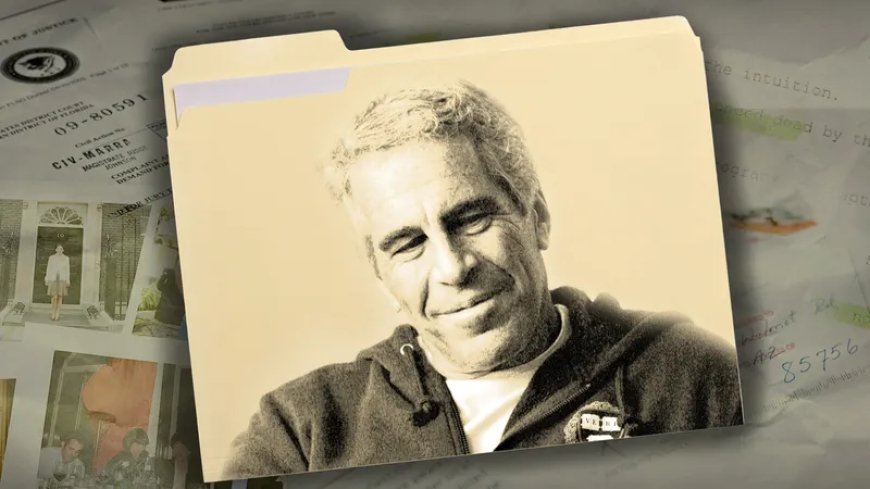
Advertisement
The release of more than three million pages of documents related to Jeffrey Epstein by the US Department of Justice is not just a data dump, it is a slow-burning political and social detonation, one that is exposing how deeply power, privilege, and impunity have been intertwined for decades at the highest levels of global society.
Advertisement
Advertisement
Advertisement
Advertisement
The files, released under the Epstein Files Transparency Act signed into law in November 2025, provide the most comprehensive official record to date of Epstein’s operations, relationships, finances, and the institutional failures that allowed a convicted sex offender to operate a trafficking network for years with minimal consequences. Although the DOJ has identified roughly six million relevant pages in total, only about 3.5 million have been made public so far, including 180,000 images and more than 2,000 videos.
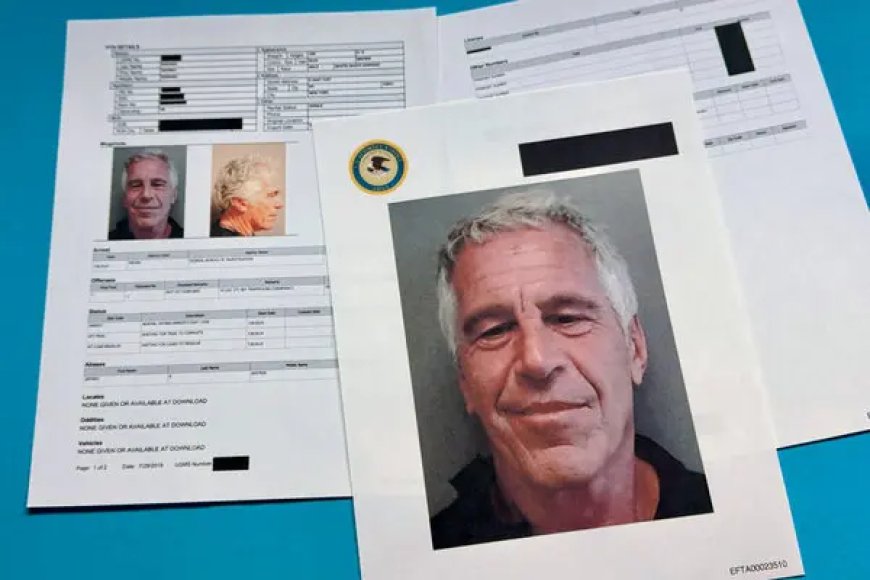
What is emerging is not simply the story of one criminal, but of an ecosystem that protected him, enabled him, and benefited from his access to wealth, influence, and silence. The documents include email chains, internal investigative reports, bank statements, flight logs, wire transfers, FBI interview summaries, and personal correspondence, painting a picture of a man who weaponised elite networks as effectively as he exploited his victims.
Jeffrey Epstein’s rise itself reads like a case study in how social capital can replace credentials. Born in Brooklyn in 1953, Epstein never completed university, yet was hired to teach at one of Manhattan’s most prestigious private schools before being ushered into Wall Street through personal connections. His later creation of a financial consultancy for ultra-wealthy clients allowed him to move freely across political, royal, corporate, and academic circles, accumulating not just money, but leverage.
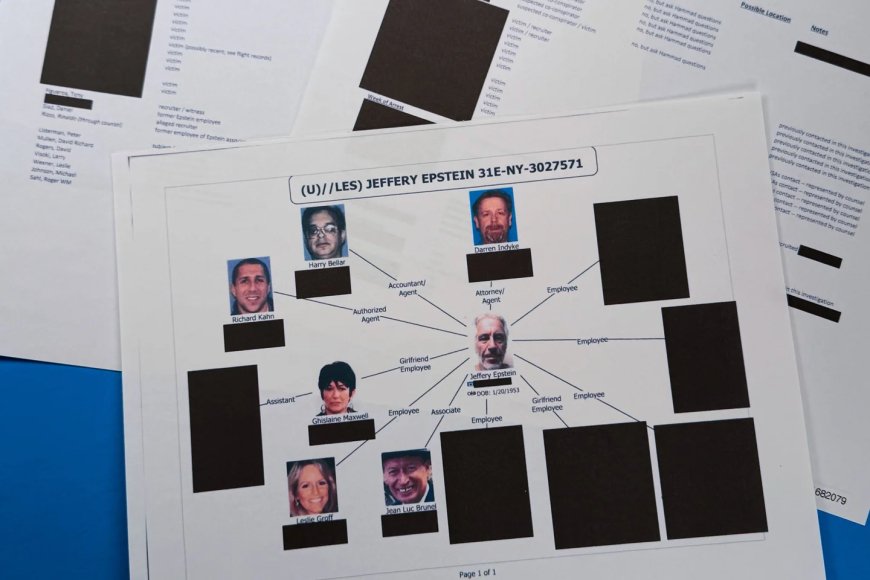
The criminal timeline exposed in the files reveals how close Epstein came to facing serious justice, and how systematically that justice was neutralised. After the FBI identified at least 36 underage victims in 2006, federal prosecutors prepared a sweeping indictment, only for it to be quietly dismantled by a secret non-prosecution agreement in 2007 that granted Epstein and unnamed co-conspirators sweeping immunity. The result was a symbolic prison sentence, generous work-release privileges, and early release, effectively institutionalising the idea that some crimes are negotiable when committed by the powerful.
The documents also provide unprecedented detail about Little Saint James, the private Caribbean island that served as the operational core of Epstein’s trafficking network. The island’s isolation, accessed only by helicopter or boat, functioned as a physical manifestation of Epstein’s legal and social insulation. Blueprints, visitor logs, staff rosters, and transport records all confirm that the island was not a mythologised rumour, but a meticulously organised logistical hub for exploitation.
Beyond geography, the most disturbing revelations lie in Epstein’s inner circle. Figures like Ghislaine Maxwell, Jean-Luc Brunel, Darren Indyke, Richard Kahn, and Lesley Groff appear not as peripheral helpers, but as structural pillars of the operation, managing recruitment, finances, legal shielding, and transportation. The fact that several of these figures either died before trial or avoided prosecution altogether reinforces the sense that accountability consistently dissolved whenever proximity to Epstein increased.
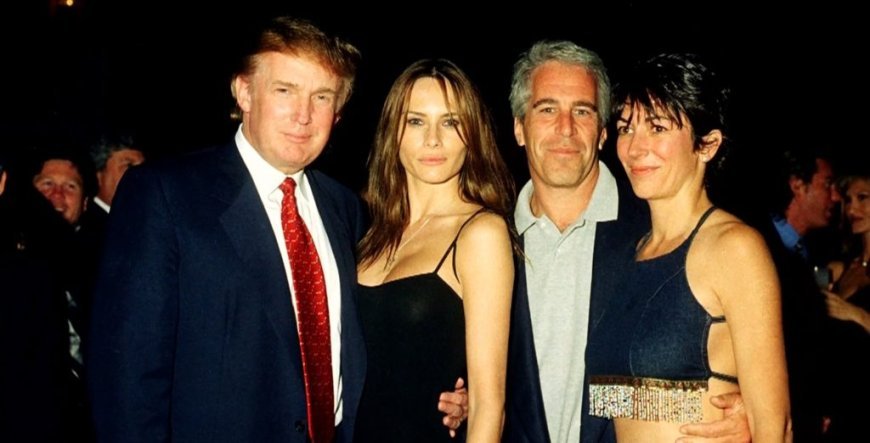
What has drawn the greatest public attention, however, is the sheer number of globally recognised names that appear throughout the files. Politicians, royalty, billionaires, intellectuals, tech executives, and media figures surface repeatedly in correspondence, calendars, and flight records. While presence in the documents does not automatically imply criminal guilt, the scale of association demonstrates how Epstein was embedded within elite culture, not marginal to it.

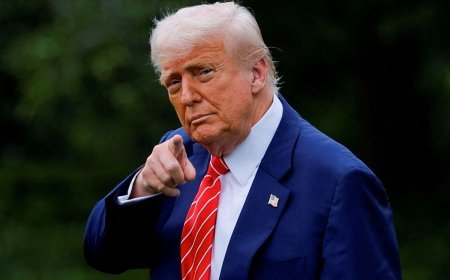
The list spans continents and sectors, from Donald Trump and Bill Clinton to Bill Gates and Elon Musk, from European royalty to former prime ministers, from corporate titans to cultural icons. Some deny involvement, some admit contact, some remain silent, but collectively they illustrate a central reality: Epstein was not operating in shadows, he was operating in plain sight, shielded by status.
Perhaps the most unsettling implication of the files is not who appears in them, but how little consequence followed for so long. Law enforcement agencies had evidence, journalists had leads, victims had testimonies, yet the machinery of justice repeatedly stalled. The system did not fail by accident, it failed by design, shaped around preserving institutional reputations rather than dismantling criminal networks.
The Epstein files therefore function less as a historical archive and more as a live indictment of how power restructures morality. They show that in elite spaces, proximity can replace scrutiny, wealth can substitute for accountability, and silence can become a currency more valuable than truth.
As more documents are released and cross-referenced, the story is no longer about solving a mystery, it is about confronting a structure. Epstein is dead, Maxwell is imprisoned, but the network logic that allowed such a system to exist remains very much alive, embedded in global institutions that continue to regulate themselves from within.
The files are not asking whether Epstein was guilty. That question has been settled. They are asking something far more uncomfortable: how many systems quietly rely on the same architecture of protection, and how many crimes remain invisible simply because they are committed by the right people.
Advertisement